


Third-grade math homework is humbling.
I prefer English, so I’m a bit flummoxed by these fractions.
But, as it turns out, there are some deeper lessons hiding behind these numerators and denominators.
Hear me out …
Fractions are parts of a whole.
Whole numbers are integers.
“Integer” and “integrity” share the same Latin root, meaning “whole” or “untouched.”
What starts as math homework is now an opportunity to discuss living a whole life, untouched by the toxic influences of our troubled time. Even better, it's an opportunity to point toward whole devotion of our holy God — and the dangers of fractional faith.
Trying to give God a piece of our lives while reserving the rest for ourselves is a recipe for disaster.
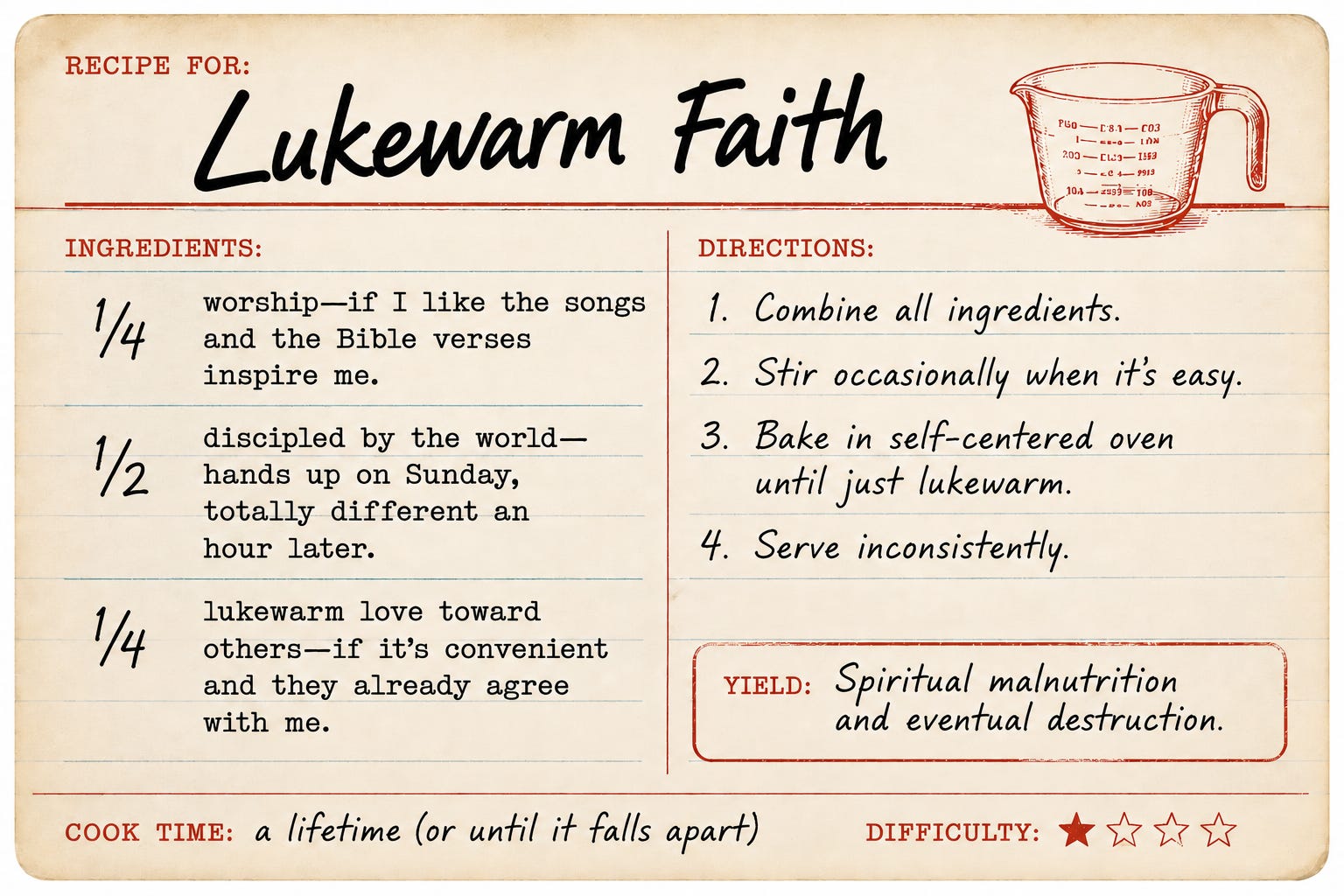
God isn't asking us for a fraction. He wants the whole thing.
Consider this prayer from Deuteronomy 6:4–5, repeated daily in Jewish tradition and highlighted by Jesus as the greatest commandment (Matthew 22:37–40; Mark 12:28–31):
Hear, O Israel: The LORD our God, the LORD is one. You shall love the LORD your God with all your heart and with all your soul and with all your might.
A great case study for biblical integrity is Job, a man of great faith despite severe trials that fractured his life.
Even when Job loses his wealth, his children, and his health, he holds firm. Not even his wife can persuade him to abandon his integrity. It’s as if he maintains a firm grip on the remaining pieces of his shattered existence, determined to keep everything from unraveling with his faith in God acting as glue.
It's a reminder of our wholeness in God when the circumstances of life feel fractured.
Job ultimately invites God to test his integrity:
Let me be weighed in a just balance, that God may know my integrity. — Job 31:6
What would those scales reveal if we stepped onto them today?
When we try to mix worldly priorities into a life meant to be wholly devoted to God, the scales tip.
In math, adding a fraction to an integer yields a mixed number. In life, doing the same leaves us mixed up, improper, and divided.
Perhaps the most dire consequence of this is the impact on our witness. When people hear us proclaim Christ but see us live a fractured faith it can push people away. It is often said that “more is caught than taught,” meaning your integrity can speak louder than your teaching. Our children especially mimic our actions.

Living with integrity is a constant daily battle surrounded by subtle traps.
Basic arithmetic is probably the least of the pressures facing my son at school each day, which is why both math and integrity are essential lessons.
He must learn that we can't retreat from the world, but rather be distinct within it.
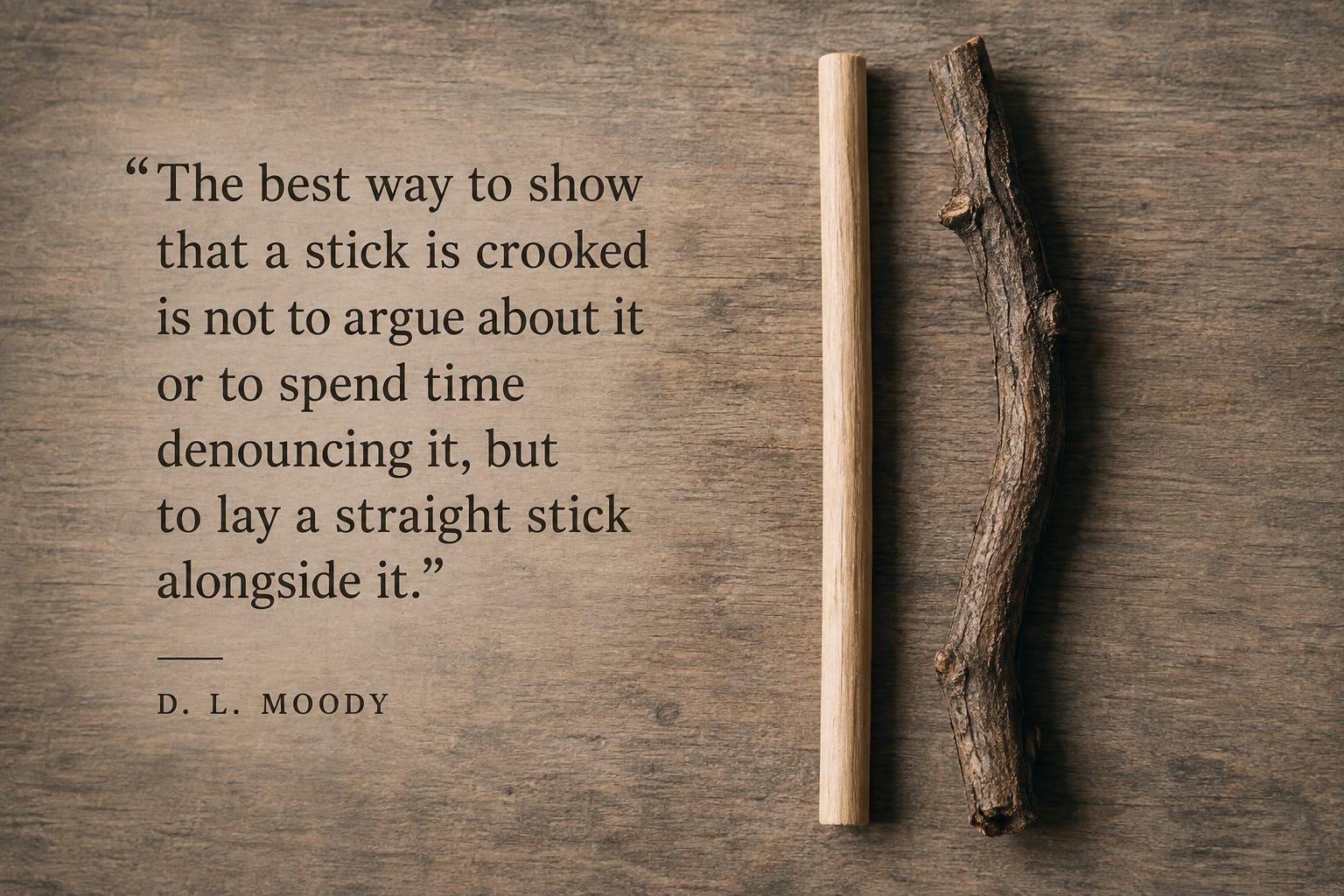
D.L. Moody once observed:
“The best way to show that a stick is crooked is not to argue about it or to spend time denouncing it, but to lay a straight stick alongside it.”
I have to teach my son to speak softly and carry a straight stick—a quick lesson in civics alongside his math homework.
Knowing the straight path does not keep us off the winding road, though.
Even Paul wrestled with doing the very things he knew were wrong (Romans 7:15). He wrote that no one is righteous — no not one! (Romans 3:10).
That's the beauty of the Bible.
Paul was imperfect and Job was broken — yet both are examples of integrity.
They show that integrity does not mean perfection.
And when we inevitably fail, we don’t balance the scales with our own righteousness. We look to Christ, whose righteousness is perfect. His death and resurrection did not just cover a fraction of our sins, and His grace isn’t measured out based on how well we perform.
If you think your bad deeds can keep you out of heaven, then you think your good deeds can get you there. This is not the gospel.
Integrity isn't answering every question on the test correctly.
It simply means refusing to offer God a fraction of a heart He created to be wholly His.
How are you teaching your kids—or reminding yourself—to live an undivided life? Join the conversation in the comments below.
Muster Seeds

Muster Seeds are open-source discipleship guides combining physical training, Scripture, discussion, and prayer. Like a mustard seed, they are small—designed to help men gather, grow, and go.
Follow our friends at the Suffer Up Podcast, whose mission is to encourage and lead others to suffer with a purpose. They strive to help others level up in life with an emphasis on spiritual, mental and physical wellbeing.