

“Dogs and sailors keep off grass.”
Legend has it homeowners in Navy towns used to post that warning on signs in their yards—a not-so-subtle message aimed at rowdy sailors.
Harsh?
Maybe.
But as a heathen sailor myself — I get it.
Our service song encourages drinking to the foam (Anchors Aweigh!).
The salt of our tongues set the profanity benchmark with the phrase cussing like a Sailor.
We’re rough around the edges—no denying it.
And yet, salty seafarers are often the very ones God uses to carry out His divine plan.
A clear example appears in the book of Jonah—the prophet famously swallowed by a giant fish. Don’t get wrapped around that detail. This is not just a children’s story.
There is another story in Jonah — one that often gets overlooked.
This is the story of the sailors.
These rarely mentioned men unwittingly helped Jonah run from God’s calling—and ultimately placed him in the aquatic buffet line.
Background
God called Jonah to Nineveh—the pagan Assyrian empire and sworn enemy of Israel.
Jonah didn’t want Nineveh to repent.
He hated Nineveh.
So he ran.
Jonah traveled to the port city of Joppa and boarded a ship headed for Tarshish—located as far from Nineveh as a person could travel at the time.
That escape plan put Jonah on a ship with the sailors who will be our focus.
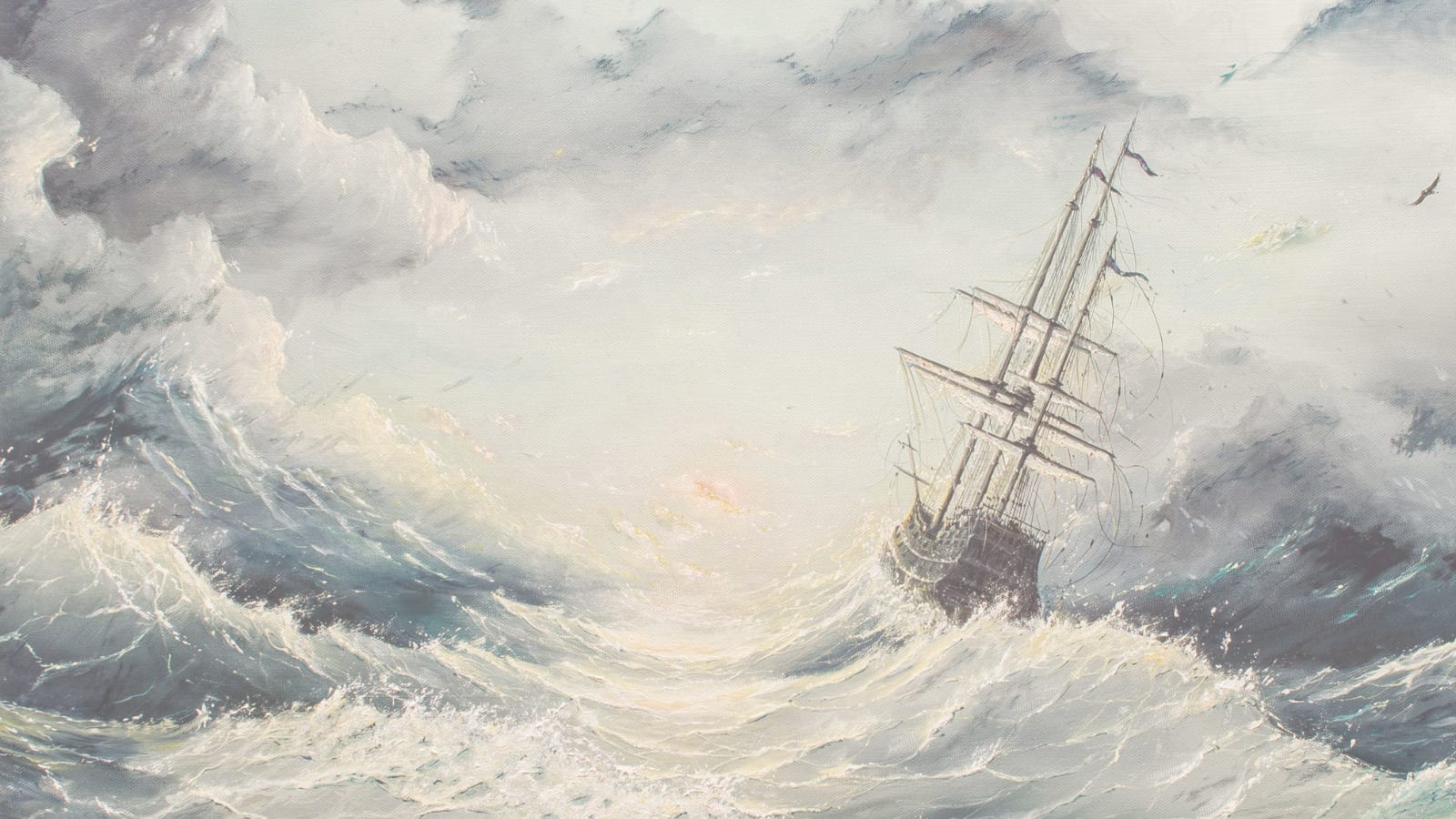
God responded by churning up a violent storm on the Mediterranean, forcing these pagan, unbelieving sailors to navigate a fierce tempest.
Their reaction reveals three critical navigation errors:
Turning to Idols
Turning to Man
Turning to Self
These same errors still throw many of us off course today.
Turning to Idols
“Then the mariners were afraid, and each cried out to his god…” — Jonah 1:5
The sailors’ first instinct was to turn to idols, superstition, and worldly solutions.
You might think that because you don’t have a golden calf statue in your living room, Old Testament warnings about idols don’t apply to you.
But most of the idols of antiquity revolved around food, economy, power, and sex.
These are the same altars we still find ourselves bowing to today.
Here’s a quick idol check …
Ask yourself: Where do I turn when I’m stressed, scared, or out of control?
For years, my idol was grief.
My mother died when I was 11 after a long battle with cancer.
I allowed self-pity to steer my life instead of Christ.
Idols also tend to multiply.
Grief segued into alcohol abuse.
Imbibing became far more frequent than abiding.
Like the sailors jettisoning cargo, I threw alcohol overboard more than once—but always on my terms, not God’s.
When you throw your problems back to the world, they behave like a boomerang. They always come back.
Scripture tells us to “cast all your anxieties on Him” (1 Peter 5:7).
But we often cast them like a fishing line—only to reel them back in five minutes later to check the hook.
We have to let go — FULLY.
Until we trust God, the storms in our life will continue to rage.

Turning to Man
The sailors look for Jonah—and find him fast asleep.
“So the captain came and said to him, ‘What do you mean, you sleeper? Arise, call out to your god! Perhaps the god will give a thought to us, that we may not perish.’”
— Jonah 1:6
The sailors are learning a hard lesson.
People disappoint.
God doesn’t.
The fallible nature of man is on full display in Jonah 1.
Many people today have been deeply disappointed by the response of religious leaders.
Church hurt has become a common reason people stay out of worship altogether.
This was my excuse for years. Certain people let me down and failed to show me love when I needed it most.
But I wasn’t condemned by a church—I was condemning myself through shame and fear.
God never condemned me—He pursued me, no matter how far I ran. He saved me.
If that’s you, don’t give up on church—because God will never give up on you.
My advice: Seek counsel, not charisma.
Don’t confuse the messenger with the Message.
Test everything against the inerrant Word of God.
Set realistic expectations.
We often carry a misguided view of what a pastor is supposed to provide.
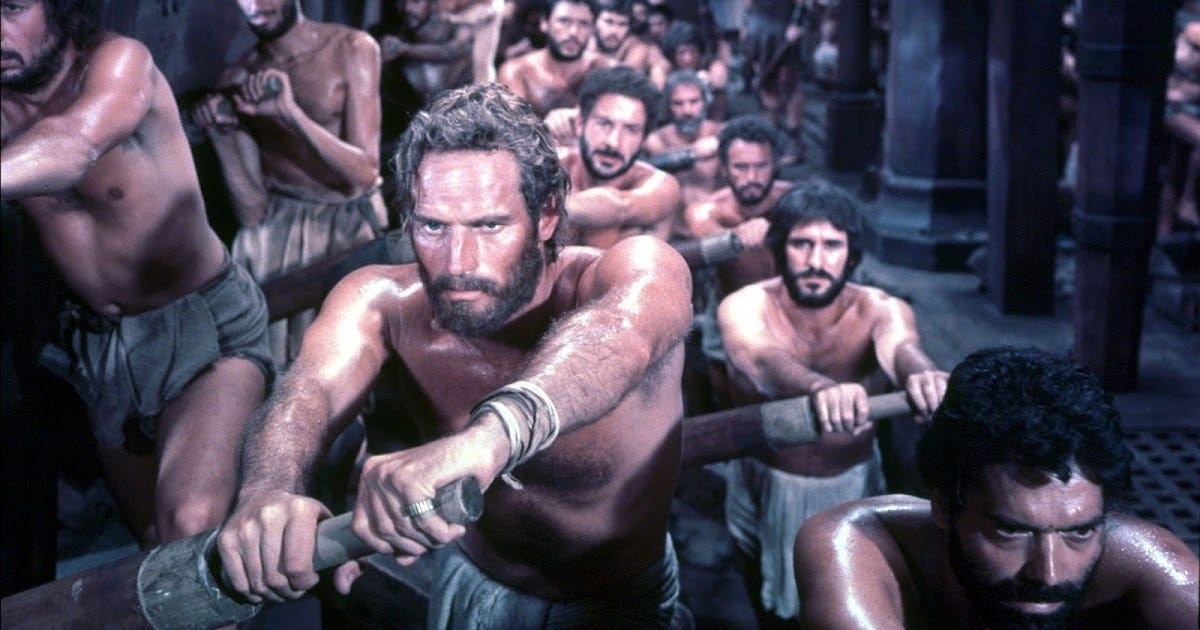
In 1 Corinthians 4:1, Paul uses a unique word for “servant” to compares ministers to under-rowers on a Roman war galley.
These men didn’t set the course.
They didn’t call the shots.
They rowed in rhythm set by the captain.
A servant of God does not lead the ship—he follows the cadence of Christ.
If you’ve been hurt by someone as off-course as Jonah, pray for guidance.
But don’t abandon ship.
Anchor yourself to Christ.
Turning to Self
“The men rowed hard… but they could not…” — Jonah 1:13
The sailors’ final attempt was raw effort.
We may be under-rowers, but we must recognize the source of our strength.
We can’t overpower sin.
Only Jesus can.
Pastor Joby Martin illustrates this with what he calls beach ball theology.
Try holding a fully inflated beach ball under water.
You can’t.
Eventually, it will explode to the surface—and probably smack you in the face.
Jesus, however, comes along and punctures the beach ball.
Only He deflates sin.
So which will you choose?
Rely on Jesus?
Or keep getting hit in the face?
Walking with Christ is not about doing better.
It’s about trusting more.
It’s about letting go fully.
God’s strength shines brightest when we stop rowing in panic and surrender.
“For when I am weak, then I am strong.” — 2 Corinthians 12:10
Turning to God
Finally, the sailors stop rowing.
They start praying.
They reluctantly toss Jonah overboard—where he meets the great fish.
And the storm ceases.
“Then the men feared the LORD exceedingly, and they offered a sacrifice to the LORD and made vows.” — Jonah 1:16
I’ve been in the same boat.
My sin tossed me around for years.
I tried to do it on my own — and failed.
Many people were caught in the wake of my stupidity.
But when Christ became the captain of my salvation (Hebrews 2:10), the storm inside me finally broke.
The seas still get rough—but now I cling to the lifelines of faith.
And like those sailors, I now have one heck of a sea story.
Mountain Mover: Write Your Sea Story
Gather a group of Navy veterans and the sea stories begin almost immediately.
We love sharing tales of rough seas and foreign ports of call.
These past experiences are a great teaching tool.
The Navy actually encourages using sea stories for this reason.
So does God.
Your testimony is your sea story.
People can argue theology all day.
But they can’t argue with this — “I was drowning. Jesus rescued me.”
Write your sea story.
Tell someone how God pulled you from the storm.
Share it in the comments below.
Put it on Substack.
Tell a friend who’s lost at sea — or asleep at the wheel.
What better way to get someone back on course and have them TURN TO GOD.
Operation Mustard Seed is published every Tuesday on Substack.
I’m glad you shared this with my Ryan. This is a power and personal look at Jonah 1. I loved this quote:
“You might think that because you don’t have a golden calf statue in your living room, Old Testament warnings about idols don’t apply to you.
But most of the idols of antiquity revolved around food, economy, power, and sex.
These are the same altars we still find ourselves bowing to today.
My sea story is porn and pot. Fought, succumbed, fought, succumbed. Prayed and prayed. Fought, succumbed, over and over. For years.
But then, one day, I said in a prayer, I commit myself to You God. Use me as You see fit.
Porn and pot vanished immediately. Never had the desire for either again.
Hallelujah praise the LORD. :)