

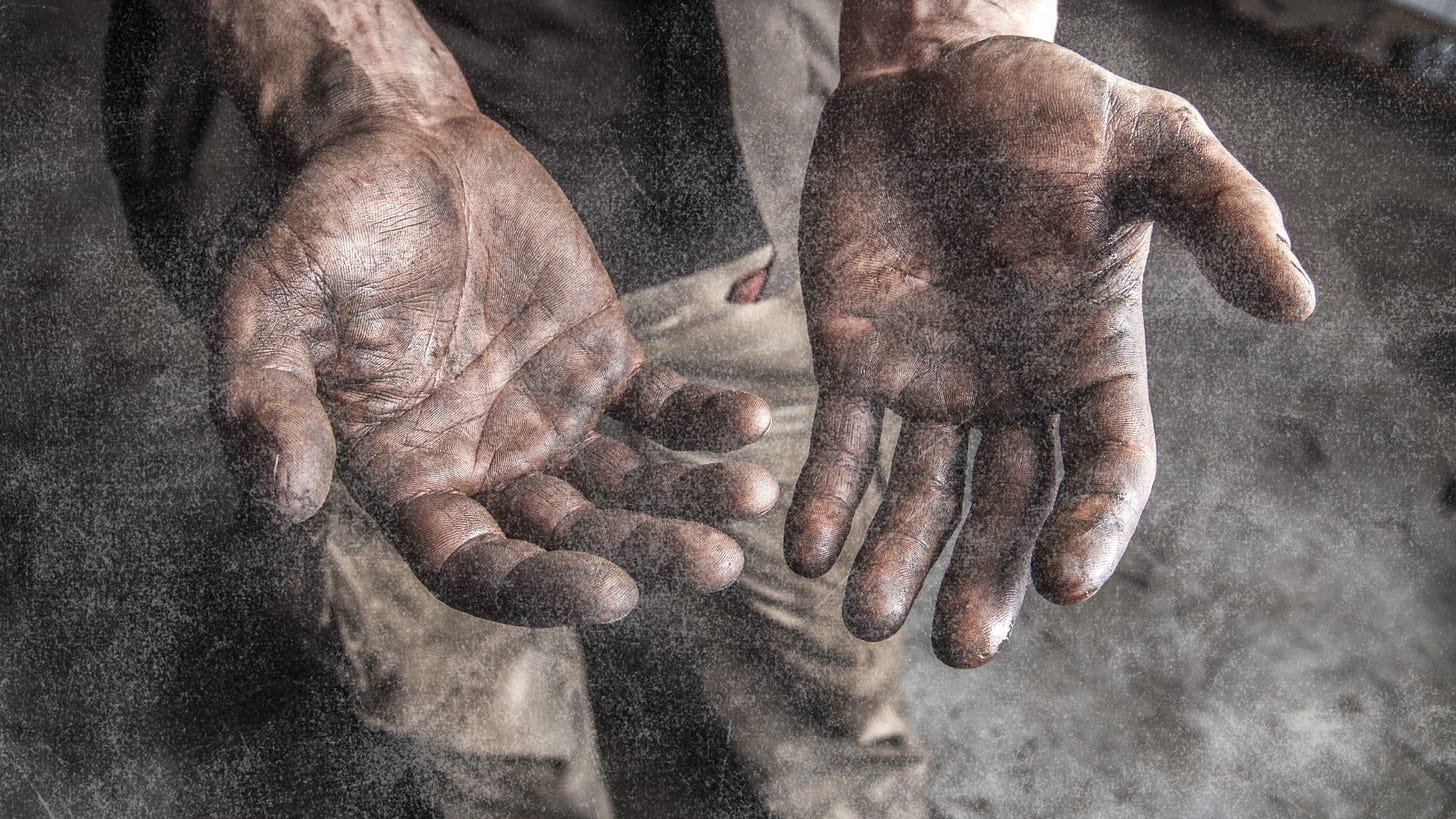
Dirty Jobs was one of the best shows ever made. Host Mike Rowe rolled up his sleeves alongside pig farmers, chimney sweeps, and boiler technicians to highlight the unseen impact of the blue collar labor force.
Nehemiah chapter 3 reads like an Old Testament episode of Dirty Jobs.
The chapter is a list of people and the specific sections of Jerusalem’s wall they repaired. It’s easy to skim past, assuming it’s just a directory of hard-to-pronounce ancient names. Some commentaries do not even cover this chapter.
But look closer.
Every gate, bolt, and stone cements a story of faithful, unglamorous obedience. Every hammer swing was a hymn of praise. It demonstrates what believers can do when they join together to build for God.
Throughout this single chapter, a specific phrase is repeated five times: the workers were tasked with setting doors, fastening bolts, and installing bars (3:3, 6, 13, 14, 15).
Let this be our blueprint for Nehemiah 3.
1. The Doors
In total, 38 men are named personally in this chapter, alongside dozens of others identified by their family, trade, or region.
The first workers mentioned are Eliashib the high priest and his brothers, who rebuilt the Sheep Gate (3:1). This was the gate used to bring animals into the city for temple sacrifices.
Eliashib and his crew had no way of knowing it at the time, but their construction project was framing a future miracle. In John 5, Jesus heals a man by the pool of Bethesda—located right beside the Sheep Gate (John 5:2).
This shows that our mundane, routine, daily work is often building the framework where someone else will encounter Christ. You rarely see how your quiet acts of daily faithfulness are preparing the ground for someone else’s future encounter with Jesus—the One who ultimately called Himself “the gate” to salvation (John 10:9).
There is a warning woven into Eliashib’s story, too. Fast forward to Nehemiah 13, and this same high priest unlocks the doors for the same enemy that was meant to be kept out. It’s a reminder that we must, above all else, guard the door of our heart against sin and compromise (Proverbs 4:23).
2. The Bolts
Have you ever built a piece of IKEA furniture, made it all the way to the final step, and realized you had two or three bolts left over?
You look at the illustrated manual. You look at the random bolts sitting in your palm. Then, you make an executive decision: “Eh, those probably weren’t all that important anyway.”
That is a bold strategy. Three days later, your brand-new bookshelf looks like the Tower of Pisa, and you’re no longer confident you can put Nana’s urn on the top shelf.
Every single bolt matters.
Nehemiah 3 repeats over and over that the workers stood shoulder-to-shoulder, locked in mutual effort. One of the men listed in Nehemiah 3 is highlighted as a perfumer (v. 8). A perfumer is not exactly a rugged brick mason. Yet there he is, mixing mortar with hands that usually mix essential oils.
God does not call the qualified. He qualifies the called.
And don’t forget about Malchijah, whose name appears in Holy Scripture for repairing the Dung Gate—the gate used to take out trash. Malchijah was the ruler of an entire district, yet he was on the wall doing work ready-made for Dirty Jobs. No one is too good to get their hands dirty for God-honoring work.
3. The Bars
The third component of the build is the bars used to lock the gates securely. In the original Hebrew text, the word used over and over again to describe these repairs is chazaq. It means to strengthen, make firm, fortify, or encourage. It appears 35 times in Nehemiah 3.
This is the exact same word at the heart of God’s famous charge to Joshua generations earlier:
“Be strong (chazaq) and courageous.” — Joshua 1:9
That phrase was the battle cry that strengthened Joshua as he led the nation of Israel into the Promised Land and when the walls of Jericho crumbled. Now, in Nehemiah, it is the exact same word used to build a wall up.
The same God who tears down the walls of our past is the One who empowers us to rebuild for the future.
Maybe you need to tear down the walls of sin keeping you out of obedience. Maybe you need to build walls and boundaries to fortify your faith.
Either way, the ultimate source of chazaq—your strength, courage, and repair—is Jesus.
Open the door to Him.
Work for His glory.
Fortify your life on His foundation.
Your Week 3 Brick:
Grab a new 3x5 index card. This week, we are focusing on blue collar theology —the hidden, unglamorous, or routine parts of your life.
Write: Identify one “mundane” area of your life (your daily commute, washing the dishes, managing a spreadsheet, parenting in the chaotic after-school hours). Write down a prayer asking God to turn that specific routine into a framework for a miracle. How can you use those moments to glorify God?
Post: Stack it with your bricks from Weeks 1 and 2.
Encourage: Remember, you aren’t building alone. Check in on the friends you invited to build with you in Week 1.
Leave a comment below: What is one “unglamorous” or routine part of your week that you want to dedicate to God today? Let’s encourage each other in the comments.

Each week of the Nehemiah study includes a companion Muster Seed—a one-hour discipleship guide featuring physical and spiritual training designed to move today's lesson from the page into practice. Continue to the companion guide and begin building. This week is all about building shoulder-to-shoulder.
Brother, thank you for sharing this beautiful reflection. It really encouraged my heart and reminded me that even when we cannot see what God is doing, He is always present and faithfully working according to His perfect plan. Jacob's ladder is such a wonderful picture of God's grace and His desire to reveal Himself to His people. Surely the Lord is in this place, and I did not know it. Genesis 28:16. I also thought of Jesus' words in John 1:51, where He revealed Himself as the fulfillment of that vision, showing that He is the only way to the Father. I am the way, the truth, and the life. No one comes to the Father except through Me. John 14:6. Thank you for faithfully pointing readers to Christ instead of ourselves. Your writing is a reminder to keep our eyes fixed on the Lord and to trust Him even when the path ahead is unclear. Trust in the Lord with all your heart and lean not on your own understanding. Proverbs 3:5-6. May God continue to strengthen you, fill you with wisdom, and use your ministry to encourage many hearts. The Lord bless you and keep you as you continue serving Him. God bless you, brother.