

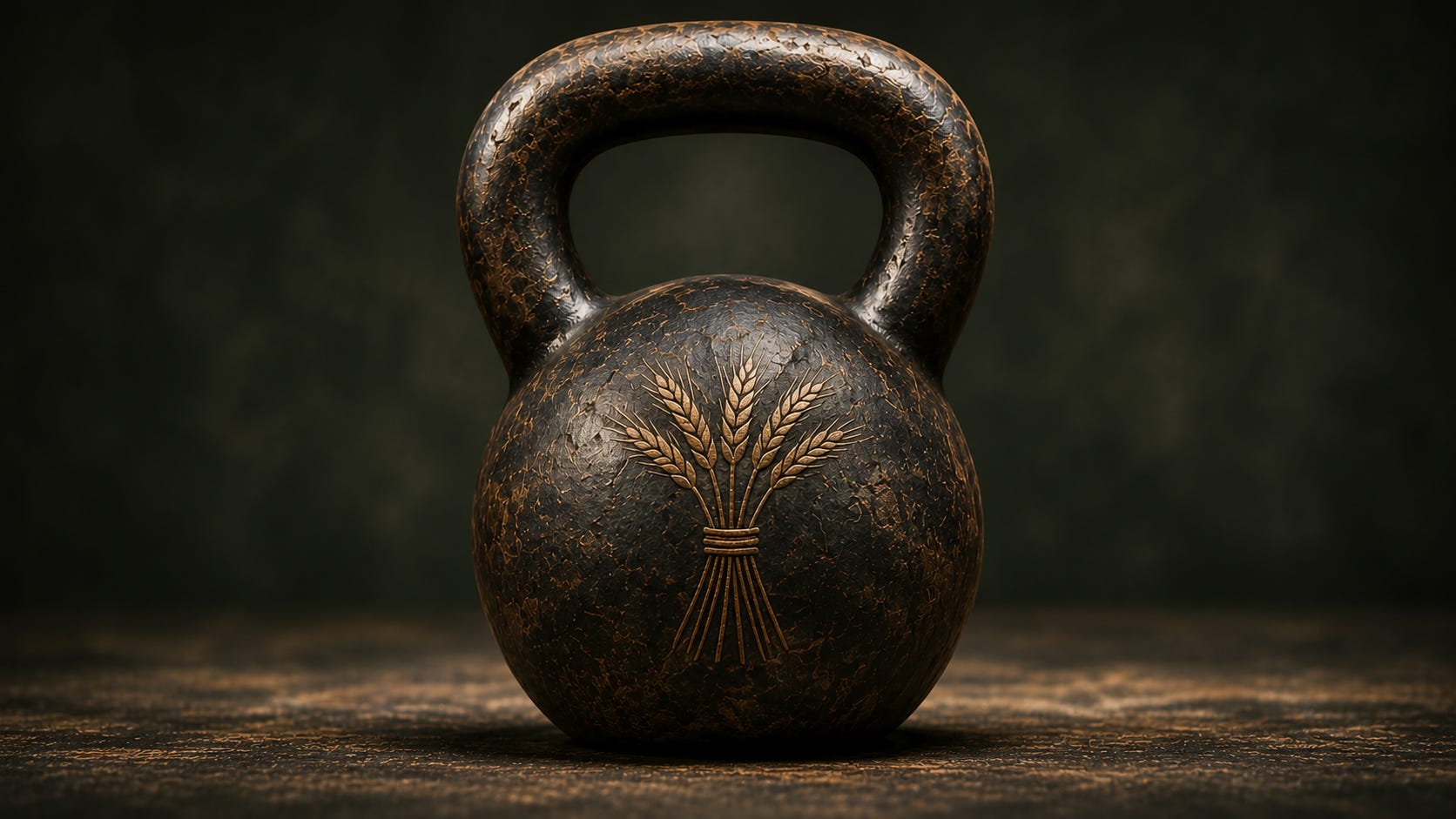
Biblical masculinity is big business.
Countless companies peddle products that promise to tap into testosterone for kingdom advancement. Yet too much of this movement is built around worldly ideas of power, dominance, and control—the very things that stand in opposition to genuine Christian character.
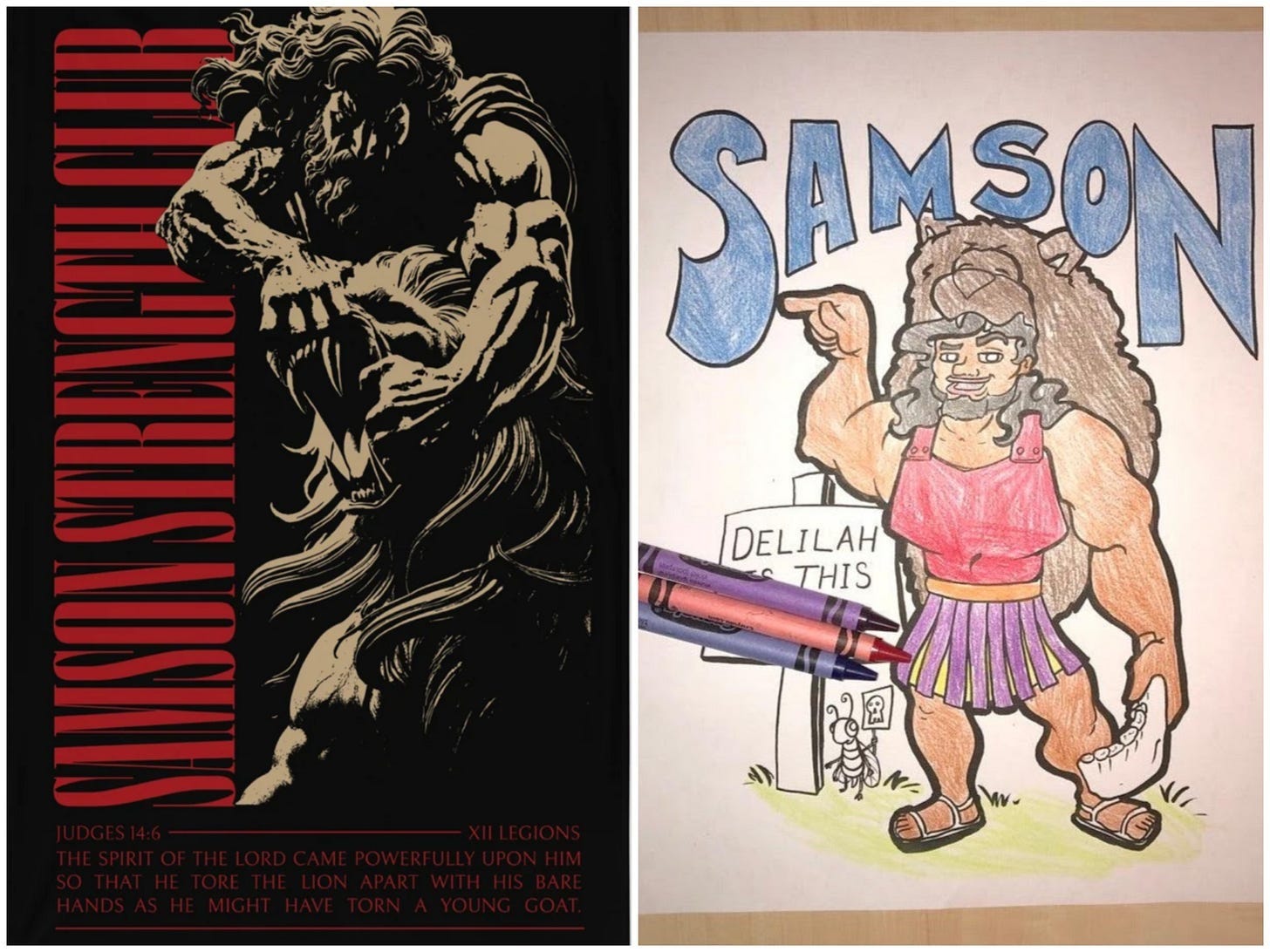
We build masculine models that look more like Samson, the biblical judge whom many admire for his strength while overlooking his squandered potential, pride, and compromise. They see him tearing apart a lion but miss the fact that he treated sin like a house cat.
Samson’s sin and squandered potential left him blind, bound, and buried. Yet his story is often interpreted through the lens of his strength, becoming a mascot for men’s ministries and kids programs. Depicting Samson as a swole superhero only creates weak theology. In fact, Samson’s physique is never described in Judges 13-16 where his story is told. Still, this is the cultural depiction we get:
There is another Biblical figure in the era of Judges that gets far less attention: Boaz.
I’ve never seen a T-shirt that says, Be a Boaz, featuring a jacked farmer hauling a bale of barley.
Yet this Bethlehem farmer may be one of Scripture’s finest models of biblical manhood that points to the ultimate man of Jesus.
Boaz’s story unfolds during the same chaotic days of the Judges that Samson lived in. We know this fact from the beginning of Ruth, where Boaz’s story is found.
Boaz’s name in Hebrew means strength.
He first appears in Ruth 2. By this point, Ruth has returned to Bethlehem with her widowed mother-in-law, Naomi, after leaving her homeland of Moab. In one of Scripture’s most beautiful displays of loyalty and sacrifice, Ruth abandons her pagan homeland and false gods to follow Naomi.
To survive, Ruth gleans barley under one of Israel’s ancient welfare laws, and she just so happens to enter the fields of Boaz — a fact that is less happenstance and clearly divine orchestration.
The first words we hear from Boaz tell us a lot about his character.
“And behold, Boaz came from Bethlehem. And he said to the reapers, ‘The Lord be with you!’ And they answered, ‘The Lord bless you!’” (Ruth 2:4)
This hearty greeting is shocking considering the epoch which the story of Ruth is placed. Remember the final verse in the book of Judges:
“In those days there was no king in Israel. Everyone did what was right in his own eyes.” (Judges 21:25)
While everyone else was doing what was right in their own eyes, Boaz honored the Lord through his speech and actions.
This barley farmer went against the cultural grain.
Boaz’s greeting placed God at the center of his work. This was a consistent part of his character.
Notice his first recorded words about Ruth, keeping in mind cultural context:
“Then Boaz said to his young man who was in charge of the reapers, ‘Whose young woman is this?’” —Ruth 2:5
His inquiry implied care and concern.
Compare that with Samson when a Philistine woman caught his eye:
“Get her for me as my wife.” — Judges 14:2
Boaz inquired. Samson demanded.
Where Samson consumed, Boaz redeemed.
Where Samson was impulsive, Boaz was measured.
Where Samson tore things down, Boaz built up.
Where Samson ruled by appetite, Boaz used his resources to feed others.
Boaz promised Ruth protection and provision. He calmed her fears (Ruth 3:11). He rewarded her sacrifice. He recognized her godly character and offered care during a time when women were grossly exploited. Read the account of the Levite’s concubine in the closing chapters of Judges to see how another woman from Bethlehem was treated.
And none of this means Boaz was weak.
When he instructed his young men to leave Ruth alone (Ruth 2:9), they obeyed. The text never describes him raising his voice or flexing his authority. He simply gave the command, and they respected him enough to follow it. You can sense the mutual respect between Boaz and the workers based on his first interaction with them.
Real strength rarely needs to announce itself.
The story builds toward Ruth asking Boaz to act as her kinsman-redeemer by redeeming Naomi’s family estate according to God’s law. Even then, Boaz refuses to cut corners. Before claiming that right himself, he seeks out the man with the first legal claim and handles the matter openly before the elders (Ruth 4:1).
Boaz obeys God’s law instead of looking for a loophole.
In the end, Boaz marries Ruth and redeems the family inheritance. More importantly, he becomes a living picture of Jesus Christ—the ultimate Kinsman-Redeemer who would one day redeem His people.
Boaz and Ruth became the great-grandparents of King David, beginning the royal line that ultimately leads to the birth of Christ. Boaz and Ruth are featured in Jesus’s genealogy in Matthew 1.
Boaz lived up to his name.
His strength wasn’t found in intimidation, bravado, or dominance. It was found in integrity, generosity, humility, obedience, and faithfulness.
Admittedly, that might be hard to sell. Boaz wasn’t a soldier or a warrior. He didn’t tear down gates or wrestle lions. He was a hard working farmer who did what was right in the eyes of God, rather than his own.
Maybe it’s time more of us went against the grain like this faithful barley farmer from Bethlehem.
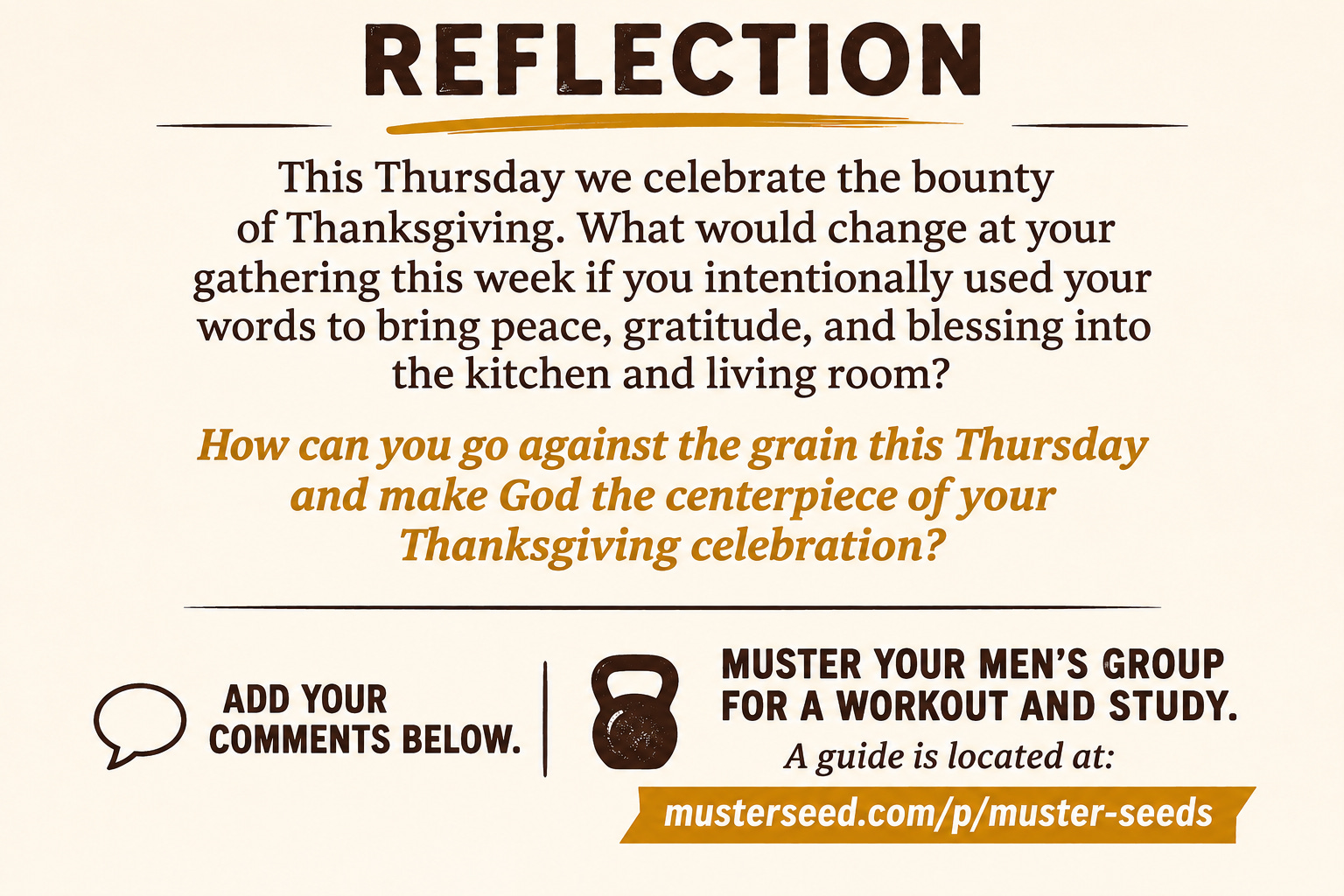
More Muster Seed workouts and study plans can be found at this link:
Muster Seeds

Muster Seeds are open-source discipleship guides combining physical training, Scripture, discussion, and prayer. Like a mustard seed, they are small—designed to help men gather, grow, and go.
Really, really liked this post, highlighting a real man of character!
A "Be a Boaz" gym flag would be a rare sight, and the greeting to the reapers is a better opening than tearing a lion. Strength that shows up as loyalty and fair dealing in the field is harder to merchandise, and more useful. Faith and manhood appear on my page now and then: https://drkasperowitsch.substack.com