


I was recently tasked with an extensive study of 2 Chronicles, and I expected it to be as exciting as watching paint dry.
Let’s be honest—some parts of the Bible are harder to read than others.
But my dive into Chronicles turned into a treasure hunt—one that changed how I see one of the most famous passages in Scripture.
This happened as I was reading 2 Chronicles 28:9–15, where I discovered the sole appearance of an obscure prophet named Oded.
Oded was a Samaritan prophet in the northern kingdom of Israel during a conflict with the southern kingdom of Judah.
Israel took captive 200,000 of their relatives—women, sons, and daughters—and brought them north.
Oded stepped out in front of the warring party and demanded they show mercy or risk angering God.
Pastor Steven Cole recognized the magnitude of Oded’s courage. He said:
“Oded’s job was a bit like an M.P. single-handedly facing a barroom full of drunken sailors. These guys were high on the smell of victory. But he goes out and tells them to send their captives home.”
Remarkably, certain chiefs of Israel agreed with Oded. They took the captives and used the spoils to clothe them, give them sandals, provide food and water, and treat their wounds.
Then they placed them on donkeys, carried them to Jericho, and returned to Samaria.
Sound familiar?
It should.
These details closely mirror Jesus’s parable of the Good Samaritan in Luke 10.
Oded could be the original Good Samaritan.
Commentator Michael Wilcox points to Psalm 119:162 to underscore the golden nugget of Oded hidden in plain sight in 2 Chronicles:
One of the delights of reading Chronicles is the frequency with which one can say with the Psalmist, ‘I rejoice at thy word like one who finds great spoil.’ Often in our study of these books, we have found springing out from the page words which we remember well from hymns or sermons or liturgies, and we have said, ‘So that’s where they come from!’
Suddenly, I felt guilty for my dread of studying this Scripture and experienced renewed joy that every word of the Holy Bible is important (Matt. 5:18).
Wilcox agrees that Jesus may have drawn on the Oded account when responding to the lawyer who attempted to test Him in Luke 10. He said he “could not but have had it in mind when telling the parable of the man from Samaria who showed such practical loving care towards the man from Jericho.”
Imagine the legal scholar scrolling the Scriptures in his mind as Jesus told this parable strikingly close to Oded.
Wouldn’t that have forced a gut check about the very people he despised?
Suddenly, the parable comes to life.
Oded wasn’t just a voice in the story—he was a prophet of God. In the Old Testament, God spoke through His prophets. Now He has spoken through His Son, Jesus (Hebrews 1:1–2).
The lawyer in Luke 10 was getting both at the same time.
It was a reminder that God’s standard for compassion—and the courage to demand it—has always been the same.
Oded shows that compassion and truth are two sides of the same coin, and it takes courage to confront those who are attempting to test God.
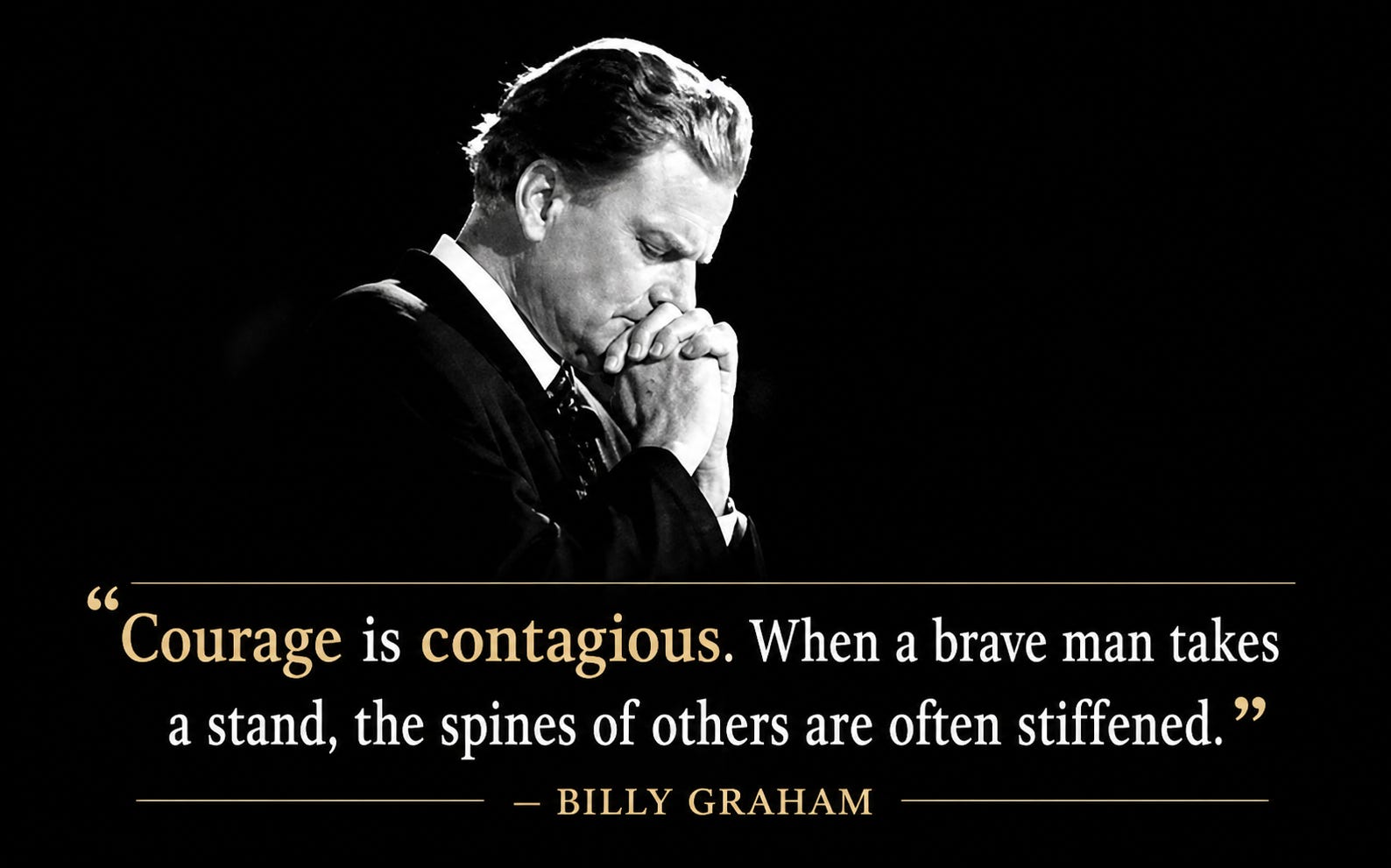
As Billy Graham once said, “Courage is contagious. When a brave man takes a stand, the spines of others are often stiffened.”
What is a favorite scripture that you see as a hidden treasure? Share in the comments.
The Suffer Up Podcast releases a new episode each Monday on all platforms.
So many good stories and characters in 1/2 Chronicles--loved Hezekiah, restoring the temple in 2 Chr 29! Favorite hidden treasure is Psalm90, attributed to Moses. It's a "life is hard, then you die" Psalm on the brevity of life, but so much encouragement tucked inside!
It's been a long time since I read Chronicles. That's an awesome connection to Jesus' teaching that I didn't know was there. Thanks for sharing this. The interconnectedness of Scripture is one of its deepest treasures.