

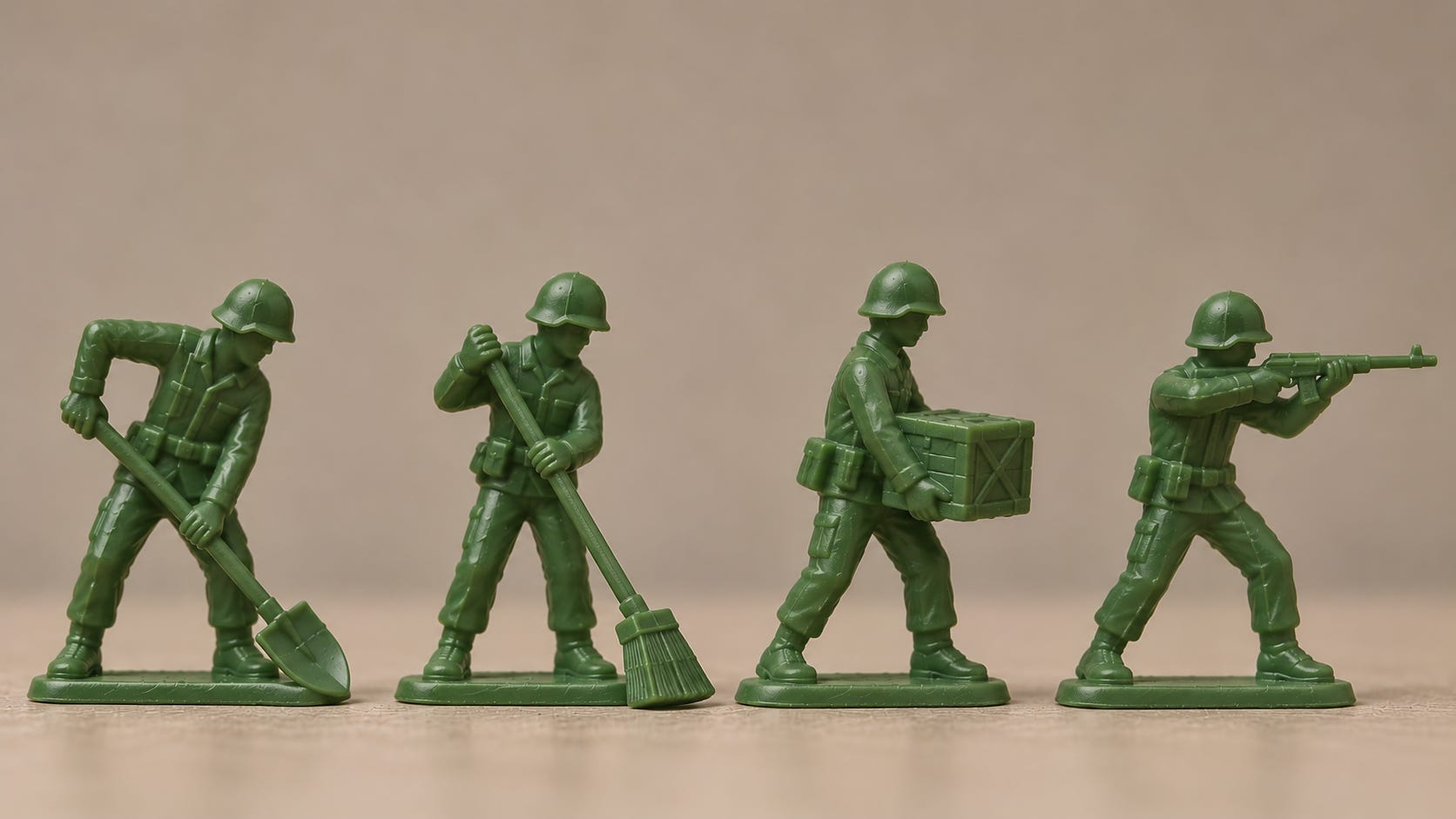
Soldiers have evolved across the centuries—from the swords and sandals of antiquity to red-plumed Roman legionaries, metal-clad medieval knights, and the musket lines of early modern warfare, down to the camouflage-clad operators of today.
Yet despite changing armor and advancing weaponry, every soldier throughout history has shared the same fundamental calling. Their ultimate aim is following orders to achieve their commanding officer’s objective.
Being a soldier has always required as much followership as leadership. This is a concept contrary to a modern culture where bookstores and podcasts encourage us to lead like a Navy SEAL or adopt some Simon Sinek secret to success.
Soldiers, meanwhile, take marching orders and move in the direction they are told.
The aim of the Christian soldier is no different. Paul writes:
“Share in suffering as a good soldier of Christ Jesus. No soldier gets entangled in civilian pursuits, since his aim is to please the one who enlisted him.” — 2 Timothy 2:3–4
Understanding a soldier’s calling matters because you cannot become what you cannot define. Identity precedes activity.
To fulfill our calling as Christian soldiers, we must know what pleases our Commander. The writer of Hebrews gives us the key:
“And without faith it is impossible to please him, for whoever would draw near to God must believe that he exists and that he rewards those who seek him.” — Hebrews 11:6

A practical picture of this service and reward can be found in Luke 10.
Jesus sent 72 disciples ahead of Him under His authority, warning them that they were being sent out as lambs among wolves (Luke 10:3). Yet they returned with joy when they fulfilled their mission (Luke 10:17). But that feeling of joy wasn’t the real reward. Jesus pointed them to something much greater, saying:
Nevertheless, do not rejoice in this, that the spirits are subject to you, but rejoice that your names are written in heaven. – Luke 10:20
This reminds us that following Christ is not all about personal glory. It’s about the glory to come. And the joy is carrying out the Great Commission and helping connect a lost world to that glory.

This work can be difficult, as the 72 show. But believers who learn to suffer with purpose become beacons to a lost world, learning to fight for their enemies rather than against them.
It also shows that a soldier’s work is rarely glamorous. It is easy to romanticize the role of soldiers fighting on battlefields, but the reality of their service can be far more mundane.
If you thank a veteran this week for their service in honor of Veterans Day, you may be thanking them for carrying a rifle—or a shovel, a spatula, or a broom. All tasks are important when they lead to the ultimate objective of pleasing the Commanding Officer.
Our charge is no different. Paul prefaced his charge to please the commanding officer with a warning to avoid civilian entanglements. He emphasized shared suffering, realizing there is no such thing as a one-man army. He wrote to Timothy from the bowels of a Roman prison near the end of his life, inviting his protégé into the foxhole of his spiritual battle.
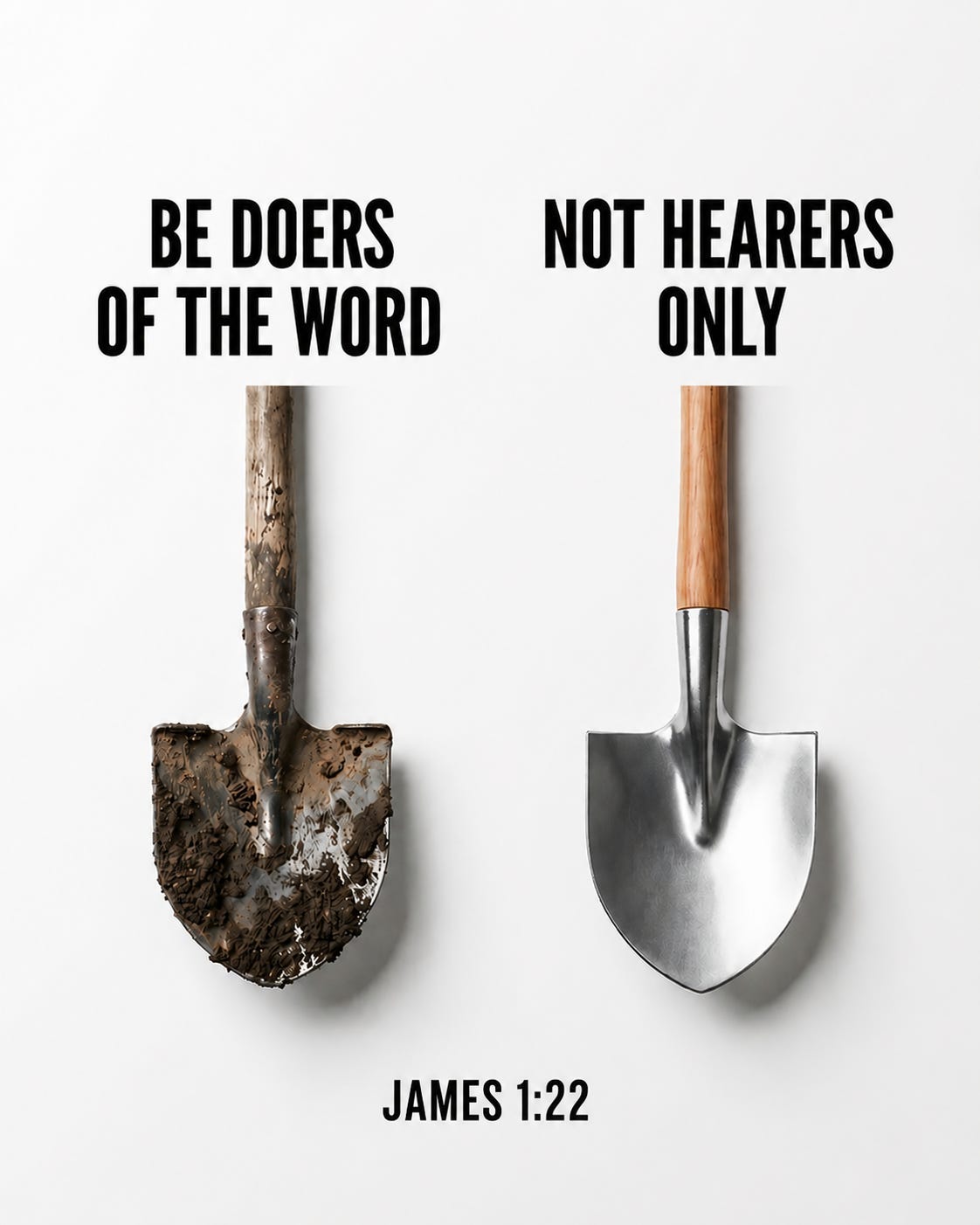
We carry this forward through the local church. A church is an armory built for equipping, not a place of personal comfort. It is where we go to share in suffering with others and please God through faith-filled worship. The church doors we enter to hear the Word are the same doors we exit to do the Word (James 1:22).
In his sermon on the Christian soldier, Charles Spurgeon ripped into the “spiritual glutton who cares for nothing but a lifelong enjoyment of the fat things full of marrow,” and the “ecclesiastical slumberer who longs only for peace for himself.”
“A soldier is a serving man. He does not follow his own pleasure; he is under law and rule; each hour of the day has its prescribed duty; and he must be obedient to the word of another and not to his own will and whim.” — Charles Spurgeon
This is how we please the One who enlisted us, by following His word.
This requires putting down the spirit of self-reliance and picking up a shovel while stepping into the foxhole with our local church family to advance the Gospel.
As we honor those who have worn the nation’s uniform this week, let it remind us of our own heavenly charge. When you thank a veteran for their service, let it challenge you to find new ways to serve as a good soldier of Christ Jesus.
There will be no greater joy than for us to hear our pleased Commander say, “Well done, good and faithful servant,” when our enlistment is over and we see our names are written in Heaven.
Where in your daily routine or local church body is God calling you to embrace “the shovel or the broom” over personal comfort this week?