


This is Week 6 of a series inviting you to zoom out to see the bigger picture of Scripture.
How do you envision the gates of Heaven?
Culture often depicts a city resting on a pillow of cumulus clouds, with towering pearly gates. St. Peter is somewhere nearby, checking you in like it’s a Hilton.
These images make Heaven look like the starting point of some great ethereal journey.
But what if Heaven is actually the finish line?
You don’t cross into the streets of gold with a harp and wings.
Rather, you arrive spent—worn out, dusty, blood on your knuckles—from serving God with everything you had.
That perspective came to me when a pastor and friend preached on 2 Corinthians 12:15:
“I will most gladly spend and be spent for your souls. If I love you more, am I to be loved less?”
In this verse, Paul gladly offers to exhaust himself for the sake of others.
He resolved to finish well, spending every ounce of energy here to help others get there.
This isn’t a fun run.
It’s an empty-the-tank dash for those pearly gates.
The Big Idea of Hebrews
The writer of Hebrews has the same vision in mind.
This anonymously penned epistle is addressed to first-century believers under persecution—Christians tempted to abandon Christ and return to the perceived safety of legalistic Judaism.
They are perilously close to going off course.
Hebrews is not merely about running the race of faith.
It is about the One who set the course—and finished it first.
It’s all about Jesus.
The Word That Frames the Race
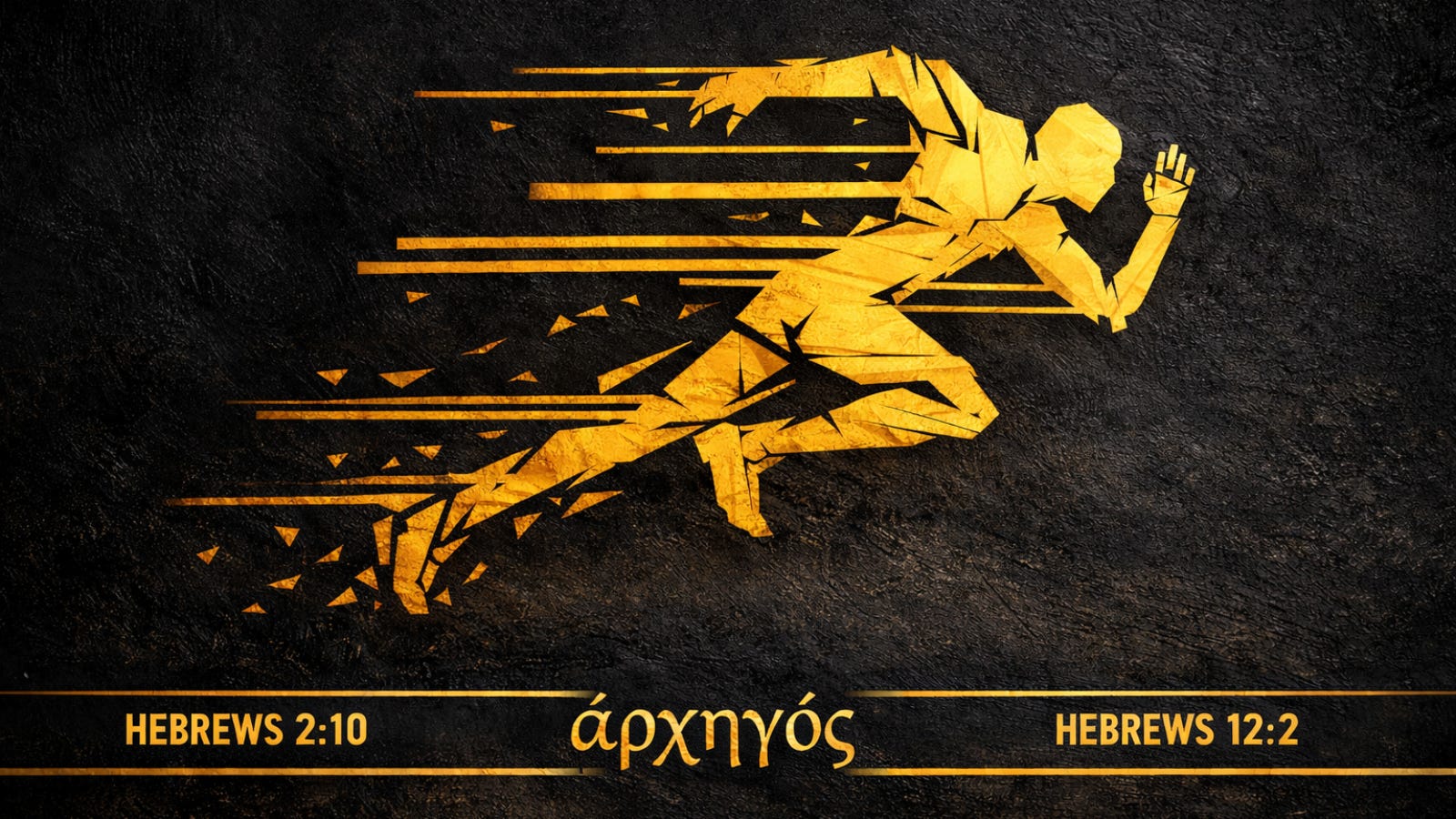
This entire idea orbits around the Greek word archēgos.
It appears twice in Hebrews and frames this 13-chapter book beautifully:
Hebrews 2:10
Hebrews 12:2
(The only other New Testament occurrences are Acts 3:15 and 5:31.)
The word fuses the ideas of “first” and “to lead” and it resists clean English translation. Various Bible translations render it as:
Founder
Pioneer
Author
Captain
Champion
One lexicon says this single word “gathers the breadth of redemptive history into a single title for Jesus Christ.”
Wheaton professor Julius Scott explains it this way:
“Given its full range of meaning, the word designates an individual who opened the way into a new area for others to follow, founded the city in which they dwelt, gave his name to the community, fought its battles and secured the victory, and then remained as the leader, ruler–hero of his people.”
Zoom out on Hebrews, and you’ll see that these two uses of archēgos mark the start and finish lines of the race of faith—pointing unmistakably to the supremacy of Jesus and charting the course to finish line.
The Start Line
“In bringing many sons and daughters to glory, it was fitting that God, for whom and through whom everything exists, should make the pioneer (archēgos) of their salvation perfect through what he suffered.”
— Hebrews 2:10 (NIV)
Hebrews opens by contrasting the old covenant—God speaking through prophets—with the new covenant—God speaking through His Son, Jesus.
Then comes one of the strongest Christological passages in Scripture. Jesus is declared in the first four verses of Hebrews to be:
The Son of God
Heir of all things
Creator of the worlds
Radiance of God’s glory
Exact imprint of God’s nature
Upholder of all things
Purifier of sins
Seated at the right hand of God
This establishes the thesis of Hebrews:
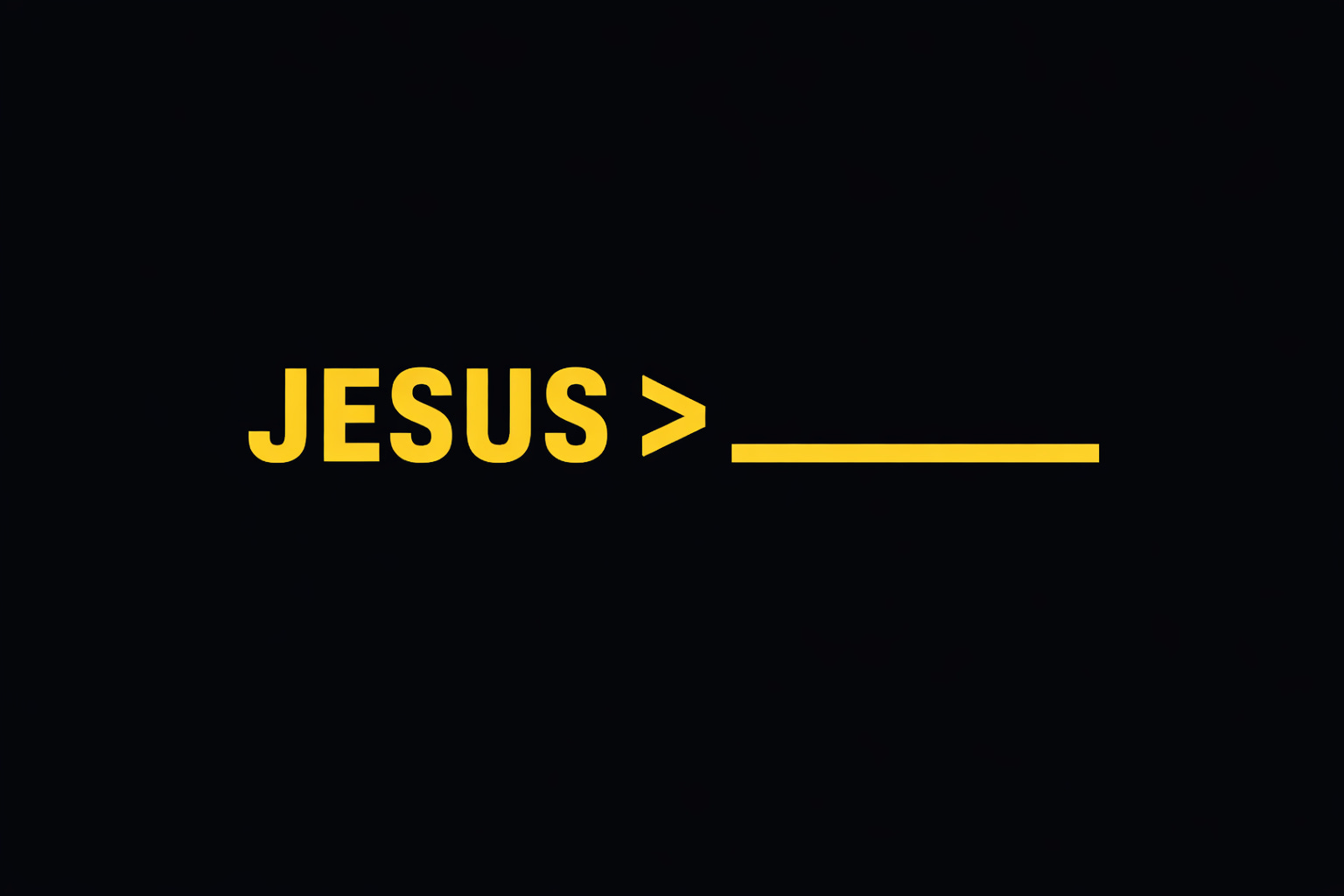
Jesus > ____________
Fill in the blank with anything.
Jesus is greater than all.
Why Jesus Could Go First
From there, Hebrews fills in that blank again and again—especially for an audience tempted to retreat to the old system:
Jesus > Angels (Hebrews 1–2)
Jesus > Moses (Hebrews 3)
Jesus > Joshua (Hebrews 4)
Jesus > the High Priesthood (Hebrews 4–5)
Jesus > Melchizedek (Hebrews 7)
But Hebrews 2 pauses the argument to explain why Jesus came in the flesh:
“But we see him who for a little while was made lower than the angels, namely Jesus… crowned with glory and honor because of the suffering of death.”
— Hebrews 2:9
Jesus humbled Himself.
He entered suffering.
He bore our sin despite a perfect life.
Why?
To be our archēgos—our pioneer, founder, victor, leader, ruler, hero.
Through suffering, Jesus blazed a trail no one else could carve.
This is the start line.
This is the call to follow well.
Faith Runs the Course
The middle chapters of Hebrews warn against drift, apostasy, and hardened hearts—trip hazards that could knock believers off the course Jesus set.
Yet Hebrews also celebrates those who did follow.
Hebrews 11 makes it clear that the most well-known Old Testament figures also ran on faith—not works. More than 20 times in this chapter, we see the words “by faith,” establishing that the cadence before Christ was still a drumbeat of faith in God’s promises.
This gives us models of faith, while making it clear that we must keep our eyes on Jesus at the finish line:
“Let us run with endurance the race that is set before us, looking to Jesus, the founder (archēgos) and perfecter of our faith…”
— Hebrews 12:1–2
Jesus endured the cross.
He despised the shame.
He finished the race.
And now He is seated at the right hand of the throne of God.
These words matter.
When do you sit down?
When it is finished.
The race is won.
The champion stands victorious.
For us to finish, we must fix our eyes on Jesus and run with endurance.
Christianity is not a one-time emotional response.
It’s not just a raised hand during a worship song.
It is a lifelong race.
Like Paul, we must be willing to finish spent so others may finish strong.
Heaven is not the starting line.
It is the finish line.

Mountain Mover
Our culture loves to celebrate—and argue about—who was first.
Neil Armstrong walked on the moon first. But Yuri Gagarin reached space first. A monkey technically beat them both.
North Carolina claims “First in Flight.” Ohio disagrees—vehemently. The dispute over who gets to claim the Wright brothers landed on both states’ license plates.
St. Augustine, Florida, claims to be America’s oldest city. Pensacola counters with an earlier panhandle settlement across the state.
Everyone wants to be first.
But when it comes to the greatest “first” of all, there is no debate:
Jesus is the First First.
He is the archēgos.
This week, celebrate His firstness:
Pray first. Spend 5–10 minutes with God before anything else.
Read Scripture before email or social media.
Study Holy Week intentionally. Begin with Jesus’ first entry on Palm Sunday (Matthew 21, Mark 11, Luke 19, or John 12). Zoom out and connect it to the prophecy of Zechariah 9:9.
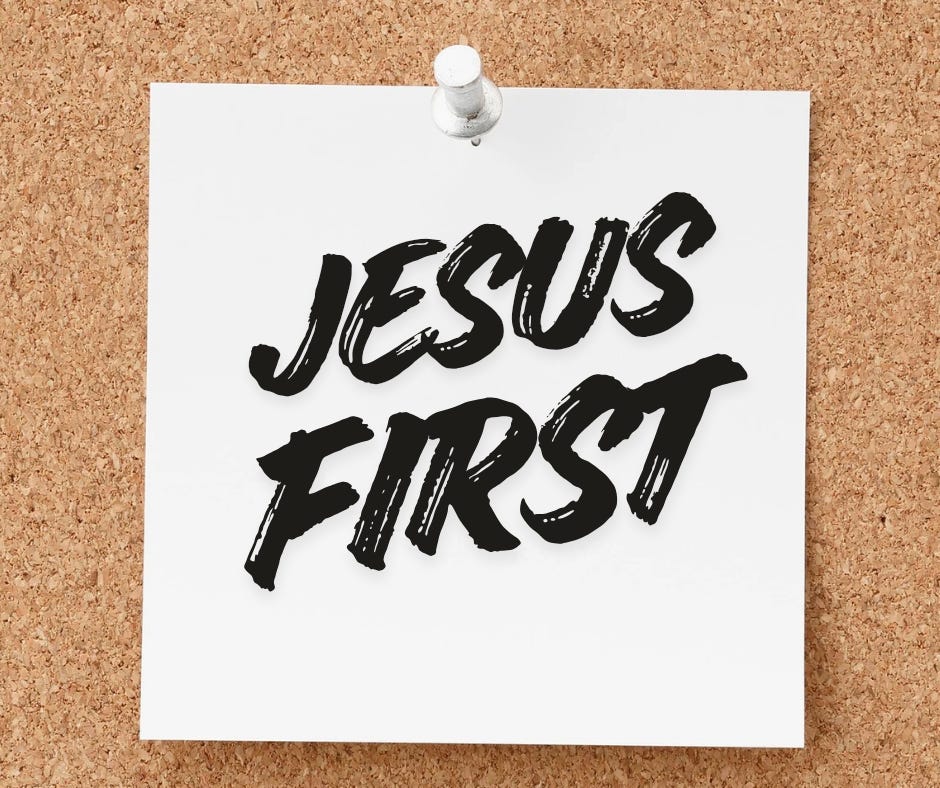
Write “Jesus First” on a sticky note or index card. Place it where you’ll see it daily.
Let Jesus be your:
Pioneer
Author
Captain
Champion
Your archēgos
Don’t view Easter as the finish line—the end of Lent.
Keep going.
Finish well.
Finish spent.
—
Operation Mustard Seed
New article every Tuesday
—
The Suffer Up Podcast is available with a new episode each Monday on all platforms.
Just be careful when you pray for God to make you tired for Him, He may just say “yes” 🙏🏻😂
“Jesus is the First First.”
As simple as that sounds, it’s true!