

If it ain’t broke, don’t fix it.
We often assume newer means better. Innovation has its place, but sometimes the wisest path is to follow a pattern that has already been proven.
I once heard a pastor remark that he arrived at church that morning in a vehicle designed, engineered, and tested by someone else. There was no need for him to reinvent the wheel, or any other part of the car.
We can make the same mistake in ministry. We're tempted to reinvent everything so we can put our own brand on it rather than strengthening or partnering with ministries that are already faithfully bearing fruit. Our desire for ownership must never outweigh our desire for the gospel.
Nehemiah created a solid model at the very beginning of this book:
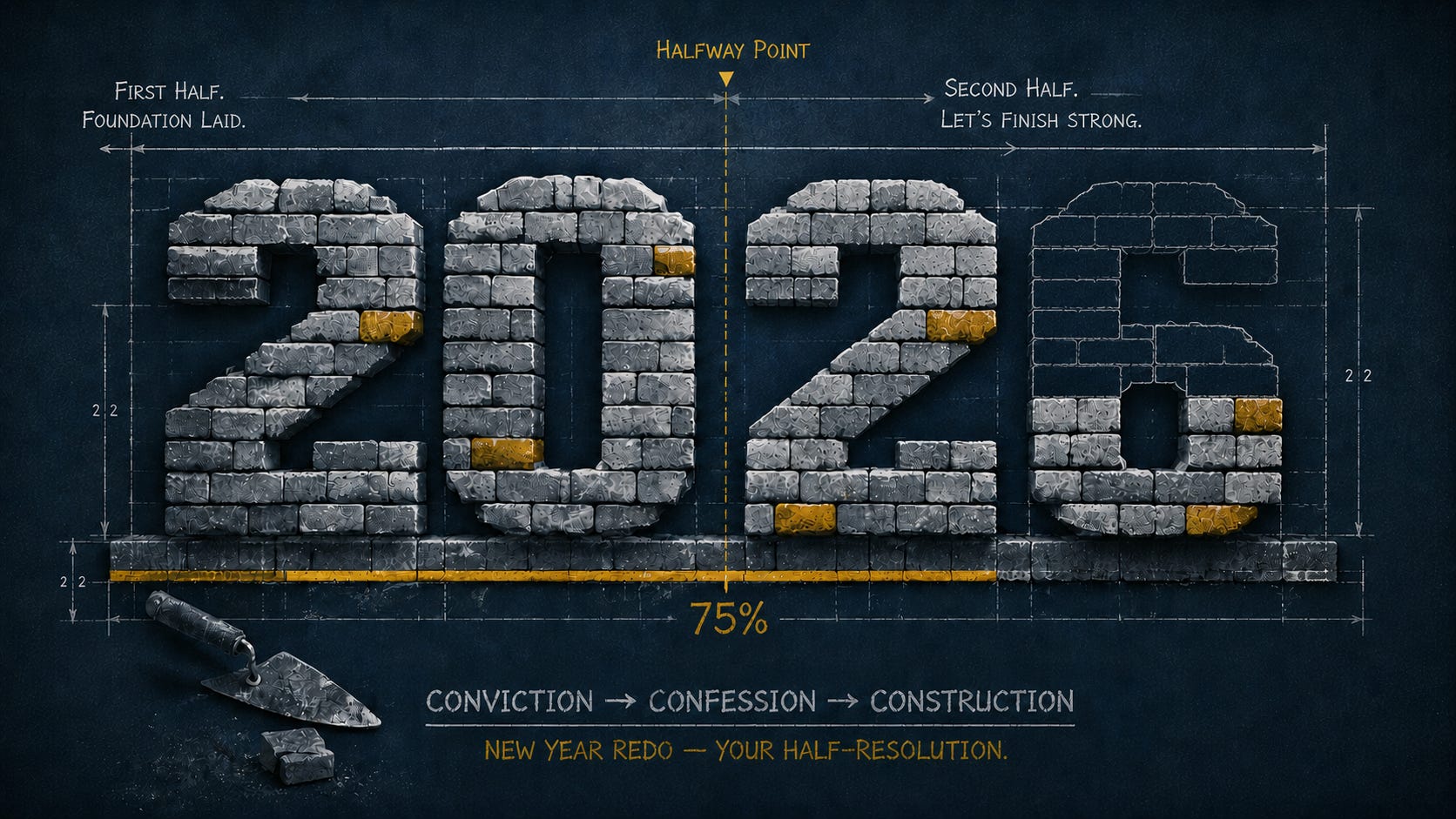
Conviction → Confession → Construction.
Before ever setting the first brick in place, Nehemiah felt deep conviction, followed by a sincere prayer of confession. Only then did he form a plan to construct the walls.
This same pattern is how Jerusalem would again be filled with the people of God—a body of believers dedicated to worshiping Him.
Conviction
To begin this process, the people of Israel “gathered as one man” by the Water Gate (8:1).
Ezra returns to open the Book of the Law—what we would recognize today as the first five books of the Bible—and reads it aloud from early morning until midday.
(Ezra is the subject of the book just before Nehemiah, and the two accounts are narratively linked.)
Ezra reads for about six hours.
Some of us start fidgeting in the pew if the pastor goes past 35 minutes. But these people were deeply convicted by God's word.
The walls had been restored. The city was coming back to life. The people sought the Lord in gratitude and reverence. They shouted “Amen.” They lifted their hands in praise. They bowed their faces to the ground in worship (v. 6).
This was not an individual effort. This was corporate worship. Just like the people had a mind to work (4:6), they had a collective mind to worship “as one” (8:1).
Notice in Nehemiah 8:7–8 that specific men were appointed to help the people understand the Word of God.
Find a Bible-believing church that helps you understand the Word of God. Seek conviction. Seek community. These steps must always come before construction.
Confession
The people also relied on corporate prayer.
Nehemiah 9:5–38 is one of the longest prayers in the Bible.
The Levites lead a prayer of nearly 1,200 words that begins with praise to God “from everlasting to everlasting” (9:5). The prayer walks entirely through Israel’s history—from God’s promise to Abraham, to deliverance through the Red Sea, to rebellion in the wilderness, and finally to their present moment.
The prayer ends with a covenant with God—a renewed commitment to obedience.
This is no different from how Nehemiah began in chapter one, confessing the sins of his nation, his family, and himself. Prayer was the cement in the wall he built from the beginning.
Can you remember how God has delivered you, just as Israel remembered His goodness in the midst of their rebellion? Are you ready to dedicate your life to obedience?
It is a commitment we cannot perfectly keep. We remain sinful humans. But when you acknowledge your sin and recognize that it can only be covered by the redeeming work of Christ on the cross, that prayer of salvation is one God will always meet with grace.
Construction
Finally, the people dedicate the rebuilt wall.
They establish community structures and appoint leaders and priests. They institute a system of giving—a tithe—to support the worship and the work of God among His people.
Christians are called to be cheerful givers. How can we expect to build godly churches if we are unwilling to give our time, talent, and treasure? Money can be a sensitive subject for many believers, but generosity is absolutely essential.
Still, none of these human systems ultimately hold. You will see that next week as we conclude our study in Nehemiah chapter 13.
So what is the point? The point is that Nehemiah points beyond Nehemiah. Walls crumble. But Jesus is the Cornerstone that will not. As Paul writes:
“For what the law could not do in that it was weak through the flesh, God did by sending His own Son in the likeness of sinful flesh.” — Romans 8:3
We cannot build ourselves a stairway to heaven. We must recognize our need for the Savior.
That recognition begins with conviction, moves to confession, and leads to the construction of strong churches and communities that help others follow the same path.
Conviction → Confession → Construction.
Build Your Prayer Wall
Jerusalem’s walls were built to protect a community of worship, and a healthy community requires all of us to pitch in. This week, we are creating a Church Brick. Write on a 3x5 card a prayer for your local church and pastors.
Ask yourself: How can I help strengthen my local church body?

Each week of the Nehemiah study includes a companion Muster Seed—a one-hour discipleship guide featuring physical and spiritual training designed to move today's lesson from the page into practice. Continue to the companion guide and begin building. This week is all about building on the basics with a simple boot camp workout.
Thank you for sharing this encouraging study. Nehemiah's life is such a powerful example of prayer, vision, courage, and faithful leadership. Before he ever picked up a stone to rebuild the wall, he first bowed his knees before God in prayer. That reminds us that every work for God's Kingdom must begin with dependence on Him. Nehemiah 2:18 is especially encouraging: "Let us rise up and build." They strengthened their hands for the good work because they trusted that the good hand of God was upon them. I was also reminded of Proverbs 16:3, "Commit your works to the Lord, and your plans will be established." Psalm 127:1 teaches us that unless the Lord builds the house, those who build it labor in vain. Galatians 6:9 encourages us not to grow weary in doing good, for in due season we will reap if we do not give up. Every believer has been called to build something for God's glory, whether it is a family, a ministry, a local church, or the lives of those around us through faithful service and the sharing of the Gospel. Thank you again for pointing readers back to God's Word. May we have the same heart as Nehemiah, remaining faithful in prayer, standing firm in the face of opposition, and continuing the work God has entrusted to us. May we always remember that true success is not measured by human applause but by faithfulness to the Lord. May God strengthen our hands for His work, give us wisdom for every decision, and help us finish the race with perseverance, bringing glory to His name alone. God bless you.
A good word, brother!