

One coat for dust, two coats for rust.
This legendary joke among sailors is a nod to the never-ending reality of maintaining steel ships in a saltwater environment.
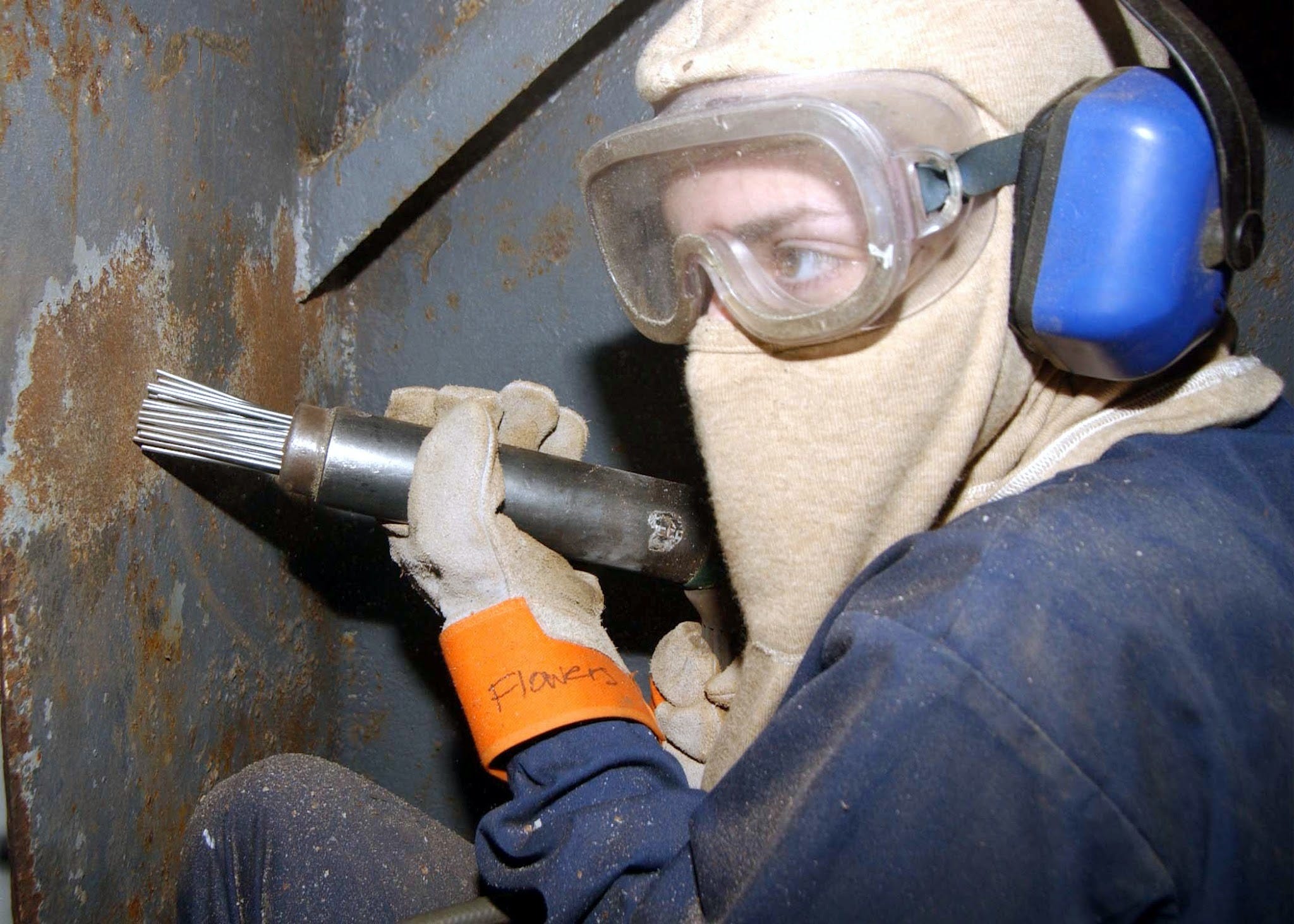
It’s a tongue-in-cheek tactic meant to delay using the dreaded pneumatic needle gun—a heavy-duty maintenance tool used to aggressively chip away layers of old paint, scale, and rust from steel decks and bulkheads.
The machine is essentially a nest of rapidly vibrating steel rods.
Think of an angry metal porcupine.
It’s essential equipment.
You can’t simply paint over rust. The underlying corrosion continues and will bleed through new paint. A fresh coat only hides the decay and creates a worse problem later.
Consider this as an analogy for your spiritual life.
Are you slapping another coat of religious paint over the corrosion underneath?
Or applying a thin layer of performative piety to cover the dust you’re trying to hide?
It’ll never work.
Grab a Bible and follow this thread to see what Scripture says about whitewashed faith:
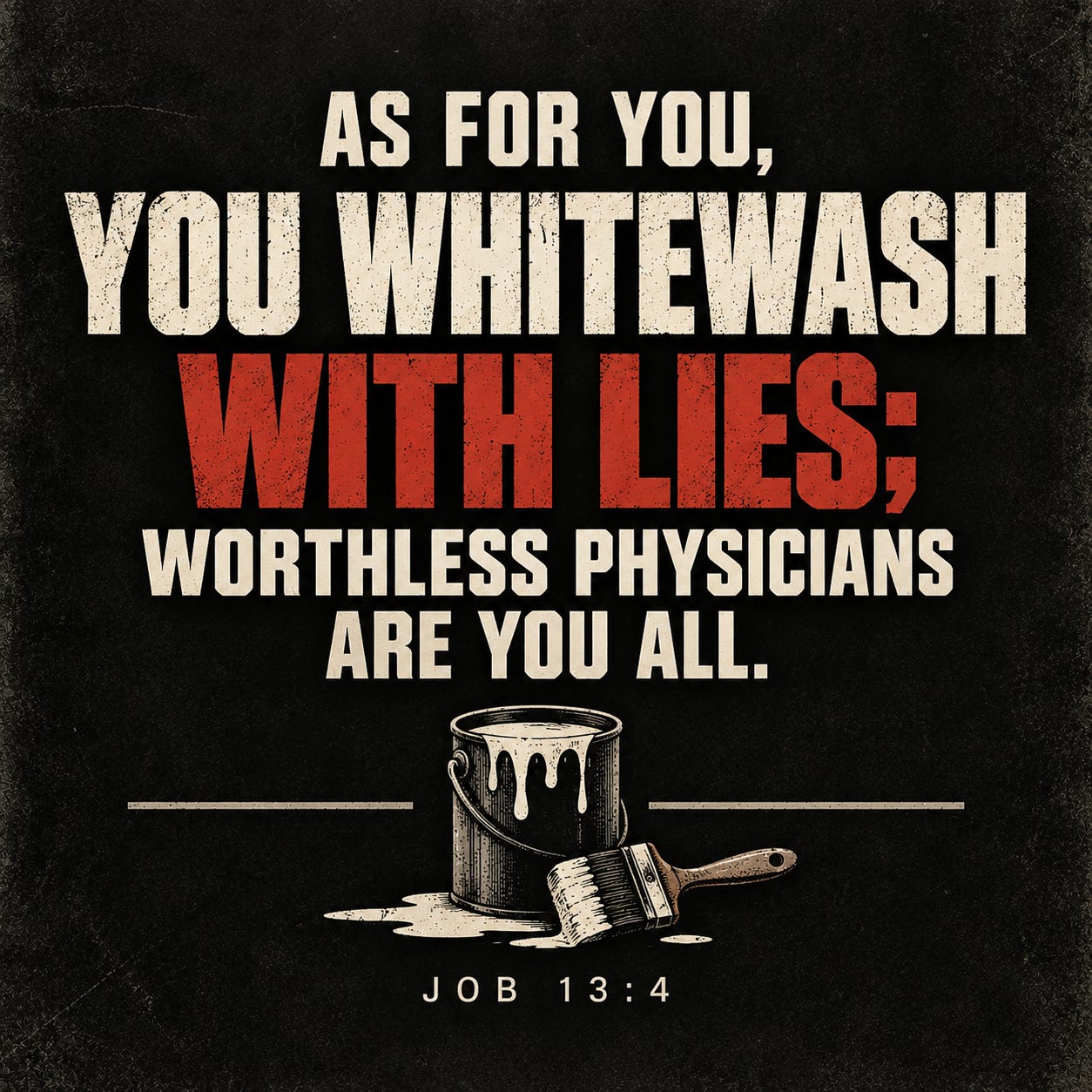
Job 13:4 →
Ezekiel 13:10–15 →
Matthew 23:27
Job: This suffering man of integrity calls out his friends for smearing him with lies—applying religious platitudes and harmful assumptions that offered no healing.
Ezekiel: The prophet delivers God’s warning to false prophets who falsely preach peace instead of repentance. God promises to tear down the whitewashed walls they built over the truth.
Jesus: Matthew documents several of the Savior’s rebukes against the Pharisees including a warning that they are acting as whitewashed tombs—visually beautiful on the outside, but full of death underneath.
Each example has a different context, but points to the same danger that still sticks with us today.
We can slap on a coat of regular church attendance.
We can apply a layer of daily Bible reading.
We can dab on some fluent church-speak and raise our hands during worship.
Some churches even slather on feel good sermons, painting pretty hues over the ugly truth of sin.
But we must drill down past these cosmetic fixes to truly attack sin.
In classical theology, this process is called mortification—the active, Spirit-led practice of putting sin to death before it destroys us.
“For if you live according to the flesh you will die, but if by the Spirit you put to death the deeds of the body, you will live.” — Romans 8:13
“Put to death therefore what is earthly in you: sexual immorality, impurity, passion, evil desire, and covetousness, which is idolatry. On account of these the wrath of God is coming. In these you too once walked, when you were living in them. But now you must put them all away: anger, wrath, malice, slander, and obscene talk from your mouth.” — Colossians 3:5–8
Mortification is not self-righteous moralism, nor is it an attempt to earn grace through grit. It is the daily work of surrendering our sin to the Spirit and putting it to death.
Surrender does not mean standing idle, though.
Claiming we have no responsibility in confronting sin is like claiming a fresh layer of paint will permanently eliminate rust. Sometimes you need a needle gun.
This violent work of mortification was classically captured by Puritan theologian John Owen in his 1656 treatise on the subject. He wrote:
“Cease not a day from this work; be killing sin or it will be killing you.”
Owen’s insistence on daily vigilance highlights a critical truth — the longer you ignore rust, the deeper it eats into the structure.
Real restoration requires drilling past surface behavior down to the underlying cause.
“It does little good to simply stop being angry without realizing a strong desire to control people and things. The lust will simply find another way to express itself in its craving for control,” Pastor Erik Raymond wrote in an essay on The Gospel Coalition.
Raymond recommends a twofold approach for root-level mortification:
Examine your life against God’s Word. Treat Scripture like a mirror that reveals what’s beneath the surface.
Work in active fellowship. Engage with other believers to help one another put sin to death.
These two disciplines should work in tandem.
While studying the Bible in isolation has value, true sharpening happens in a community built on trust where honest friction is invited.
Every men’s ministry in America wants to slap Proverbs 27:17 on the front door, but not all are willing to embrace the uncomfortable heat and flying sparks required when iron truly sharpens iron.
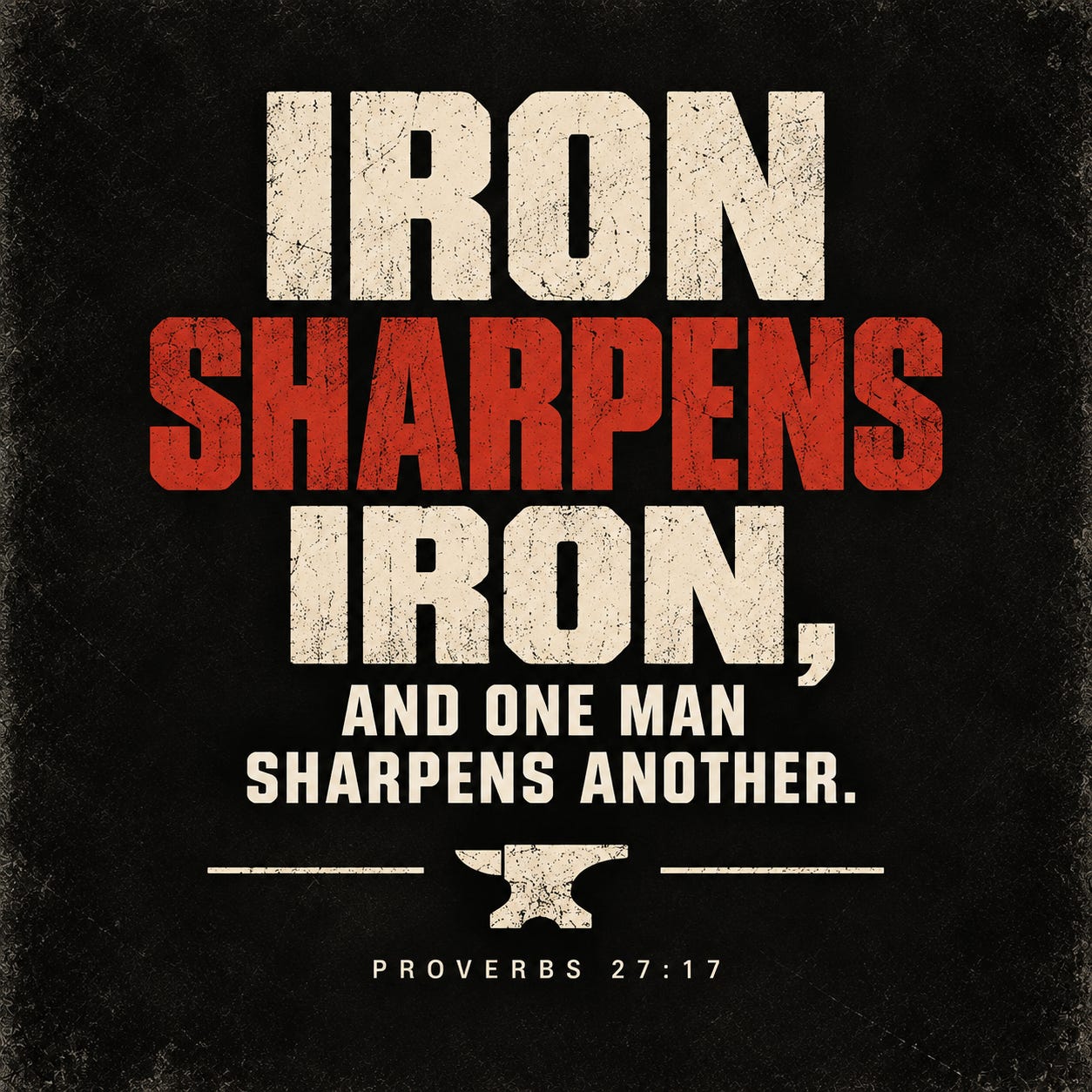
This often feels as abrasive as the needle gun — which is why we avoid both.
But avoiding the problem doesn’t make the problem go away. Imagine letting your brother walk out of a Bible study with a sin that you could have helped correct. I’ve wrestled personally with regret from not being more bold with my brothers.
Go back to Job 13:4. Job was angry because his friends presented bad advice as godly counsel.
They weren’t sharpening him. They were grinding him down.
The most damaging thing you can do is needle gun down to bare metal and then leave it exposed. We can’t leave our brothers out in the rain without covering.
Confrontation without restoration isn’t enough. That’s heartless.
Even Dorothy didn’t leave the Tin Man standing there.
The rust of sin will cause you to similarly seize up.
It will come through the paint.
Sin will come through the spiritual whitewash.
Don’t slap a couple of coats on it.
Drill down beneath the surface.
Expose the rust.
Kill the sin.
And then cover what has been exposed—not with another coat of religious paint, but with the grace of Christ.
Muster Seeds

Muster Seeds are open-source discipleship guides combining physical training, Scripture, discussion, and prayer. Like a mustard seed, they are small—designed to help men gather, grow, and go.
Follow our friends at the Suffer Up Podcast, whose mission is to encourage and lead others to suffer with a purpose. They strive to help others level up in life with an emphasis on spiritual, mental and physical wellbeing.