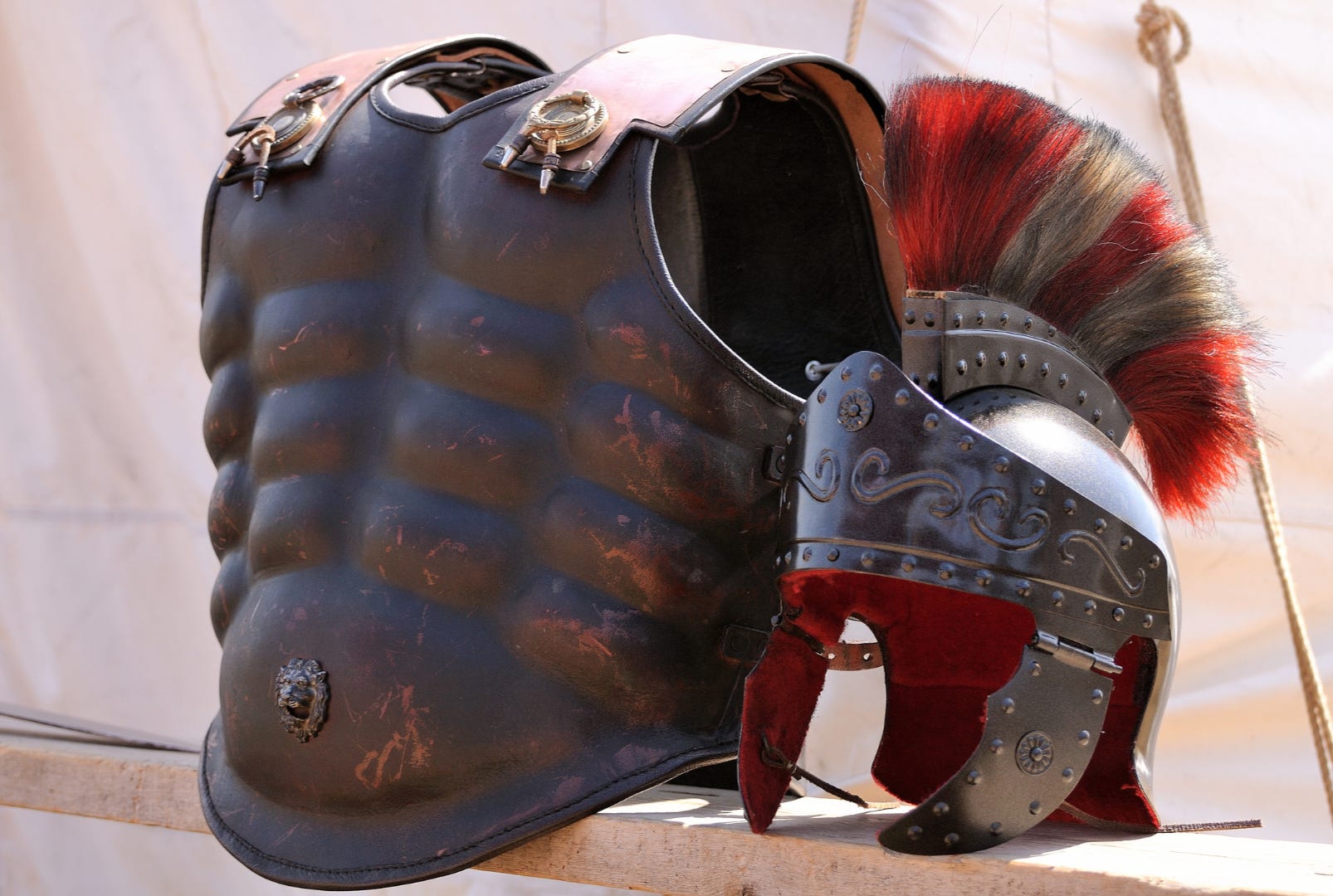
The apostle Paul’s imprisonment in Rome gave him daily exposure to soldiers dressed in the legionnaire’s distinctive breastplate, helmet, belt, and sword. I always assumed he drew on this to write his famous Armor of God passage in Ephesians 6.
Then I read Isaiah and realized Paul was actually inspired by the Old Testament prophet.
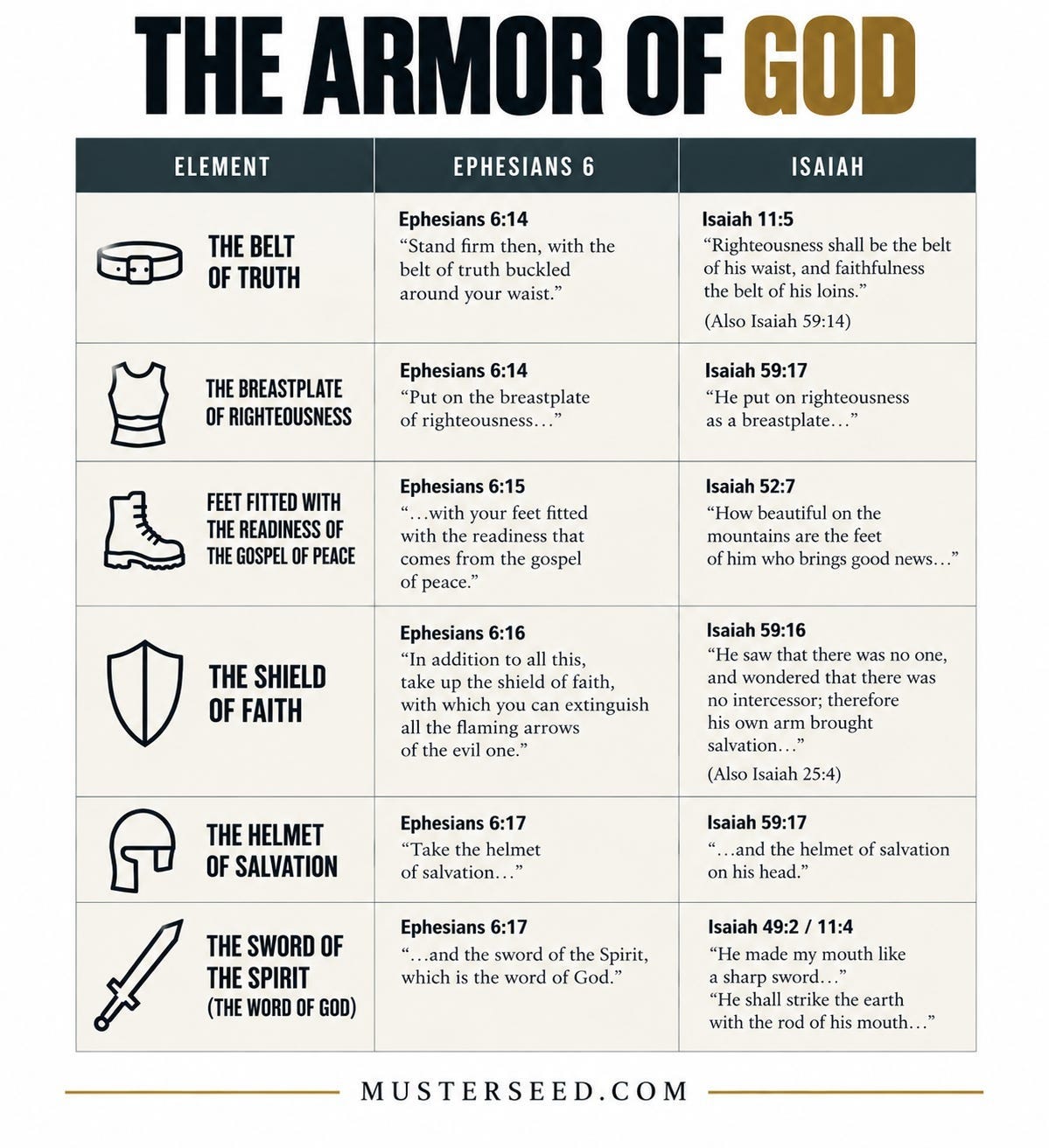
Through Isaiah, God declared that He would take up armor and enter the fight Himself, confronting injustice when no human intercessor could be found. This was a prophetic foreshadowing ultimately expressed through Jesus, who came as the belt of truth that holds up our belief, the breastplate of righteousness we receive, the salvation we proclaim, and the peace we carry into the world.
Truth is lacking, and he who departs from evil makes himself a prey. The Lord saw it, and it displeased him that there was no justice.
He saw that there was no man, and wondered that there was no one to intercede; then his own arm brought him salvation, and his righteousness upheld him.
He put on righteousness as a breastplate, and a helmet of salvation on his head; he put on garments of vengeance for clothing, and wrapped himself in zeal as a cloak.
— Isaiah 59:15–17
Paul pulled this and other passages from Isaiah to pen his seminal work on spiritual warfare in Ephesians 6. The intertextual connection with Isaiah allows us to overcome common interpretive issues with the text.
Reading Ephesians alongside Isaiah shows the armor of God isn’t intended to be elements we collect to wage war on spiritual darkness, but rather a battle garment given to us through Christ’s victory on the cross.
Jesus entered our broken world as the ultimate divine warrior. He faced every battle and temptation we endure, yet without sin (Hebrews 4:15). On the cross, the one who wore perfect righteousness willingly bore the judgment we deserved.
He didn’t just take on the world’s sin—He gave His righteousness to sinners who were once God’s enemies (2 Corinthians 5:21; Romans 5:10).
Where original sin began with a fragile fig leaf of shame, final victory was won through the imputed covering of Christ’s breastplate of righteousness.
Now we must rely on the power of Christ’s righteousness in us to continue waging the war of intercession. We must stand in the very gaps that human effort and shallow religion failed to fill in Isaiah 58-59.
In Isaiah 58, God tells His people that true worship isn’t self-righteous performance—it is pouring themselves out for the oppressed, hungry, and vulnerable. When God’s people step into those dark places, He promises they will be called “the repairer of the breach” (Isaiah 58:12).
A breach was a gap in a city’s defensive wall—an opening that left the people defenseless against enemy attack.
Being a repairer of the breach may mean fighting for the very people the world tells us we should be fighting against. Paul modeled this brilliantly. Sitting in a Roman cell, he prayed for the soldiers who held him captive, with the goal of spreading the gospel throughout the entire Praetorian guard (Philippians 1:13). He modeled Christ’s call to pray for our persecutors (Matthew 5:44).
While the Roman guards believed their armor gave them power over their enemies, Paul understood that the battle wasn’t against flesh and blood. He knew that true victory requires intercession, not intimidation.
The armor of God wasn’t meant to make us more like Maximus Decimus Meridius. It was meant to make us more like Christ. That means stepping into the breach for the vulnerable, praying for those who persecute us, and wearing the armor of the one who has already won the war.