

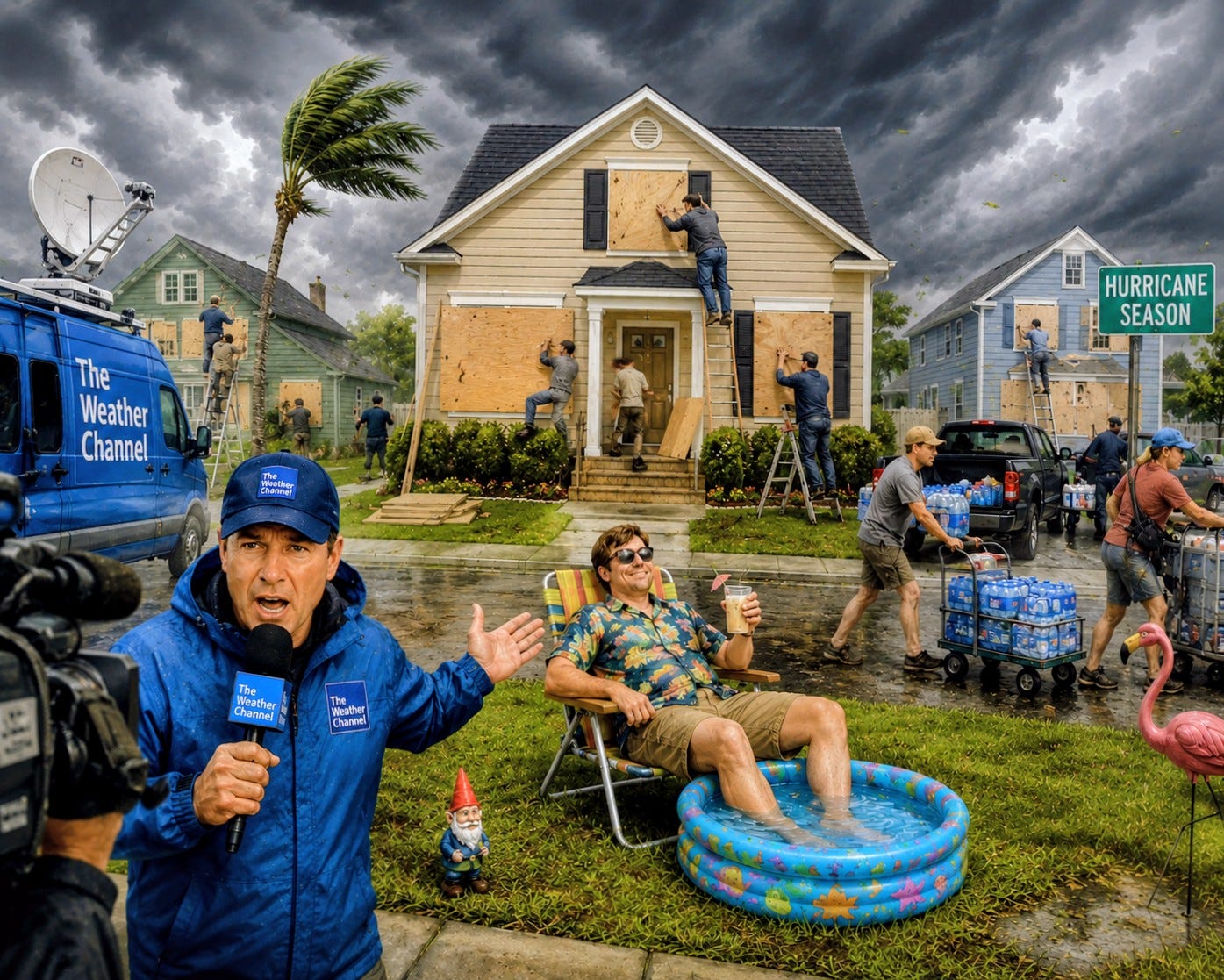
Hurricane season is underway in the Atlantic.
Some people will head to a hardware store and stockpile water, batteries, and other provisions in preparation for a major storm.
Others will go to the liquor store and wait until they see Jim Cantore standing in their neighborhood.
The apostle Paul knew how to storm prep. He was keenly aware of how violent the sea could become. He survived at least three shipwrecks (2 Corinthians 11:25).
Acts 27 is one of those shipwrecks. It documents Paul’s respect for storms—and the crew he traveled with who did not.
Examine this passage and see how well stocked your spiritual storm kit is...or isn't.
Voices of Influence
It is noted that Paul would travel after “the Fast was already over” (Acts 27:9). This was basically hurricane season in the first-century Mediterranean.
Despite Paul being well-traveled and knowledgeable about these seas, no one was willing to listen to him as the storm swirled around this grain ship bound for Rome.
First, the pilot’s advice was taken over Paul’s, and they pressed forward. That may seem logical if you think of the ship’s pilot as a nautical expert. (Acts 27:9-11)
His motives, however, were likely anchored in the financial interest of getting the grain from Egypt to Rome at the end of the shipping season.
Who has your ear? Are you seeking wise counsel—or voices that align with your self-interest?
The Short Game
The next mistake was that the ship’s pilot wanted to attempt to travel from Fair Havens to Phoenix, a short 40-mile journey to a port with far greater comforts. (Acts 27:12)
They thought they could safely get just a little further.
This is how you lose the short game.
How often do we tell ourselves … It’s just a little farther. Just one more compromise. Just one more click. Just one more drink. Just 40 more miles into sin.
Confirmation Bias
Once out on the water, the crew thought they were safe and sound as a south wind blew gently (Acts 27:13).
Jesus actually used the south wind to illustrate how people are keen to interpret weather but unable to understand the signs He performed (Luke 12:56).
The ship’s crew in Acts 27 were seeking confirmation for their bad choice. The Bible says they “thought they had obtained their purpose.”
When we seek our own purpose rather than submit to God’s will, we often manufacture confirmation.
The Bible is too often taken out of context as a tool to build arguments. Chuck Swindoll says beware longhorn sermons: “A point here, a point there, and a lot of bull in-between.”
Where are you trying to justify sin in your life, rather than seeking justification through repentance?
The Anchor of Faith
The ship’s crew paid for their mistakes.
Just as Paul warned, the storm came, and they were “violently storm-tossed” (Acts 27:18).
They were starving, soaked, and losing hope when they finally turned to Paul.
While they were panicking, Paul was praying.
He reported that God intended for him to reach Rome, and that no one on the ship would be harmed as long as they followed his divinely inspired direction.
“So take heart, men, for I have faith in God that it will be exactly as I have been told.” — Acts 27:25
Paul’s storm kit was packed with faith.
The rest of the crew drifted with the winds.
Shipwrecks don’t always start in the storm.
They start in the decision to ignore the warnings.
The Suffer Up Podcast is available with a new episode each Monday on all platforms.