

Casual conversations with coworkers are a welcome break from the 9-to-5 grind. We rarely think much about them.
One minute, you’re talking about the latest highlight on ESPN. The next, someone points out that the kid from Silver Spoons grew up to launder money in Ozark—and suddenly you’re confronted with the fact that you’re old enough to get both references.
But hidden inside those conversations is a goldmine of opportunity. This may be your greatest gospel mission field.
You don’t need a blue checkmark on social media to be an “influencer.” We are all influencers. The real question is: How do we maximize that influence for God?
Christopher J. H. Wright offers this perspective:
“We often ask, ‘Where does God fit into the story of my life?’ when the real question is, ‘Where does my little life fit into the great story of God’s mission?’”
Influence rarely starts with a massive platform. It starts with proximity.
Nehemiah understood this. He used his proximity to power in the Persian palace for God. Nehemiah chapter 1 ends with a simple statement:
“Now I was cupbearer to the king.”
Proximity Is Power
Nehemiah wasn’t a priest, prophet, or power broker. He never gets mentioned in the New Testament. He was a servant. His job was to make sure the king did not get poisoned. This was neither glamorous nor safe.
But God did not move him to a higher status. He used Nehemiah right where he was, surrounded not just by the king, but the entire royal family and court.
Nehemiah 2:6 notes the queen was seated right beside the king. This could be an echo of Esther, another unlikely servant used by God in a similar way.
Most of us don’t have direct access to a royal court. But all of us have access to people.
We often expect pastors and church staff to carry the entire weight of evangelism, but you have everyday access to people they will never meet: a neighbor, a coach, your gym partner, or the trivia whiz with Jason Bateman facts.
We go to church to be equipped (Ephesians 4:12–16), and then we put that training to work out in our circles of proximity.
Consult the King
To be fair, talking about your faith can be intimidating. You don’t want to beat people over the head with a Bible and send them running in the opposite direction.
Nehemiah was intimidated, too. The heavy burden he carried for Jerusalem left him visibly distressed, and scripture notes he had never appeared sad before the king (Nehemiah 2:1).
When the person in charge of making sure your wine isn’t poisoned looks miserable, you tend to take notice. This sets up a pivotal moment:
The king said to me, “What is it you want?” Then I prayed to the God of heaven, and I answered the king. — Nehemiah 2:4–5
Notice the sequence:
Question.
Pause.
Prayer.
Answer.
Before Nehemiah spoke to the earthly king, he prayed to the King of Kings. If you are afraid to use your influence, follow this blueprint: consult the King first.
Expanding the Ripple
The king’s question is also how faith often comes up in these situations. People will start noticing something different in your demeanor. You may casually mention an engagement at church. Suddenly your gospel influence grows.
Nehemiah didn’t just ask for permission to leave his position in the palace. He leveraged his relationship to ask for official letters from the king guaranteeing safe passage and resources for the rebuild.
“And the king granted me what I asked, for the good hand of my God was upon me.” — Nehemiah 2:8
Networking might not be listed among the spiritual gifts, but relationships are powerful tools in God’s hands.
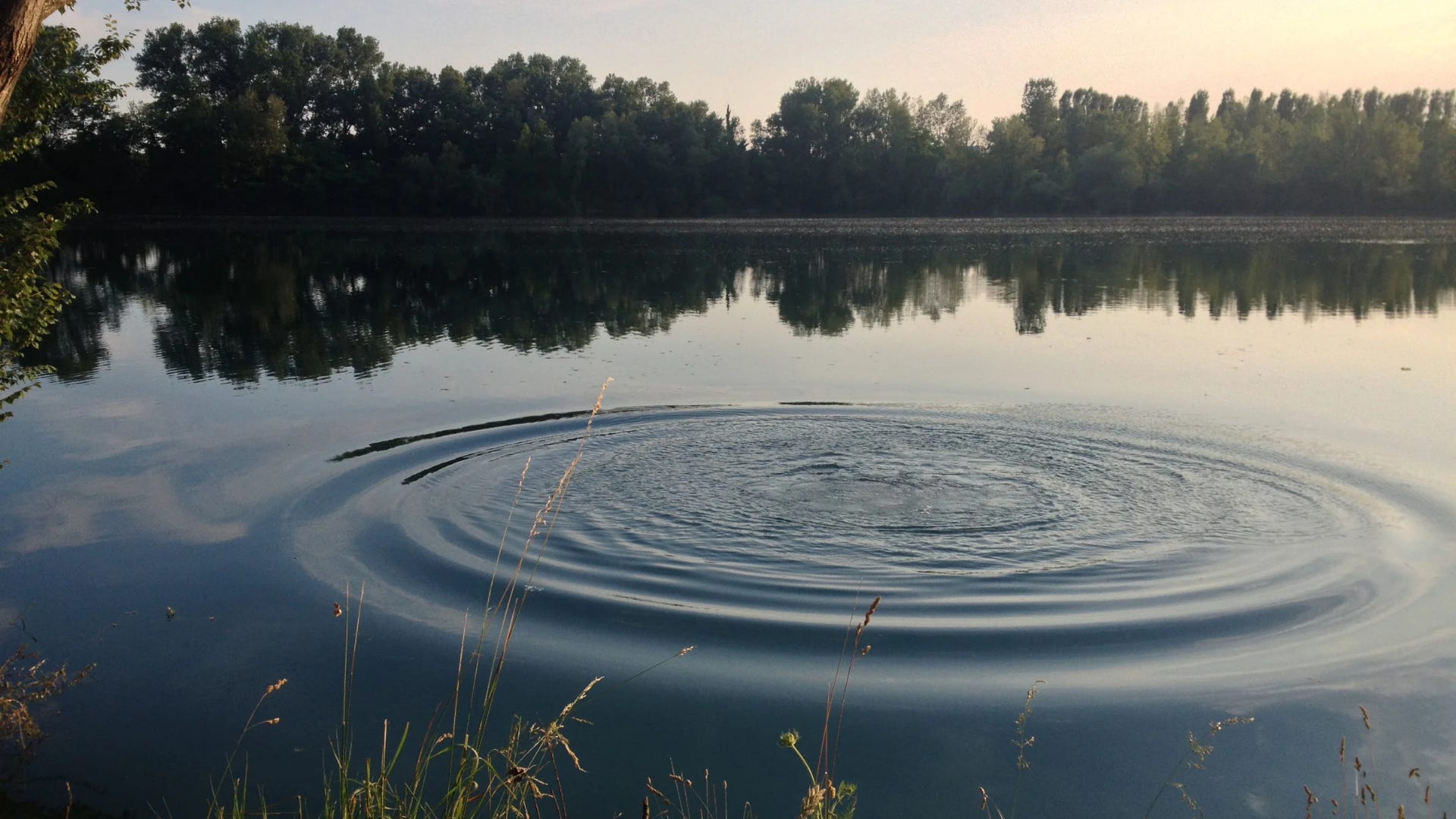
Circles of influence ripple outward like a stone tossed into a pond. Every conversation is a pebble. Every act of kindness is a ripple. A single gospel conversation has the potential to travel much farther than your eyes can see.
You have to be willing to toss the rock in the water, though, if you want to make a splash.
Build Your Prayer Wall
This week, we are adding a visual tool to our Prayer Bricks to help map out our proximity.
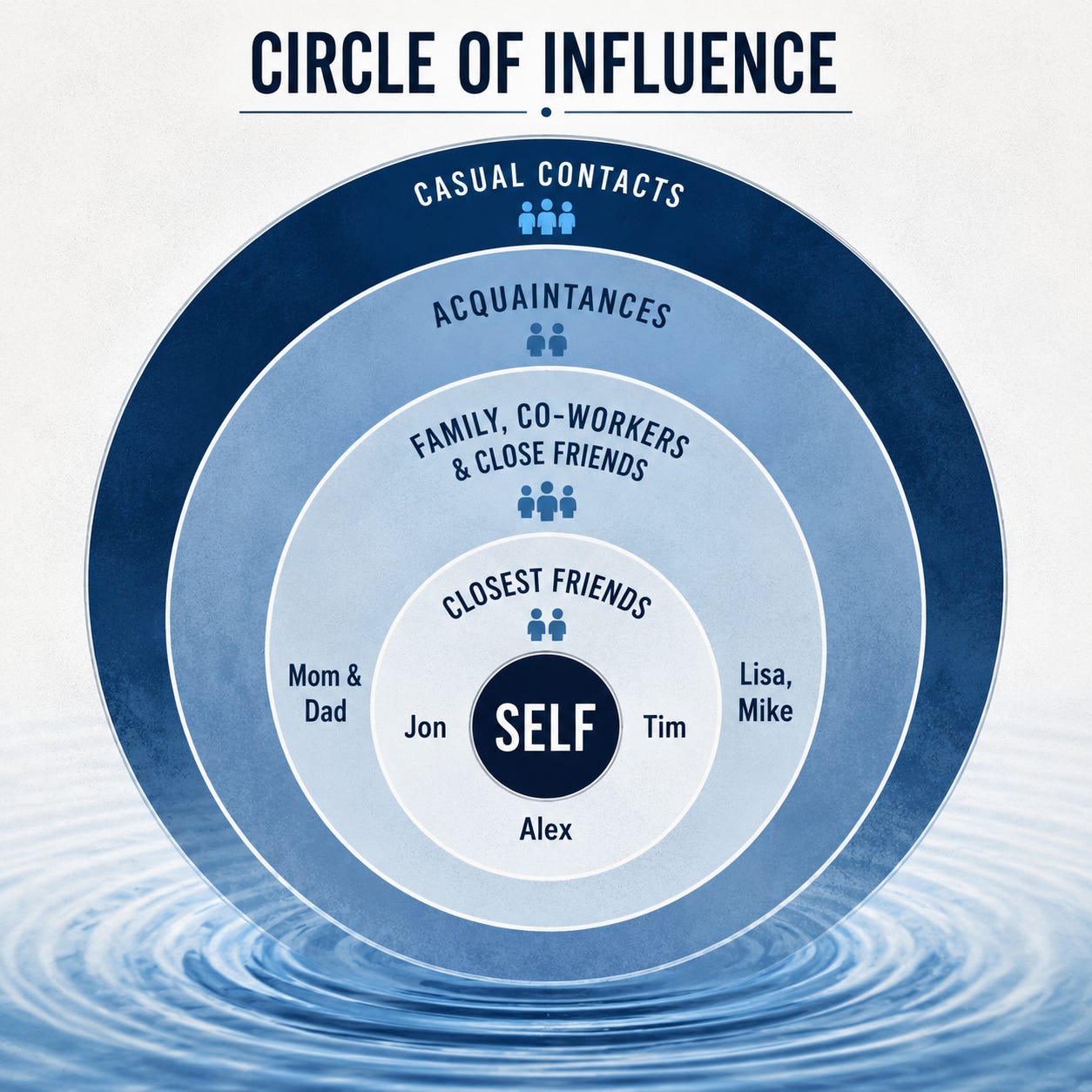
On a blank sheet of paper, sketch out these concentric circles, starting with “Self” in the center.
Circle 1 (Closest): Write the names of your 3-4 closest friends. (If you can’t name three, that’s your cue to plug into a local church small group).
Circle 2: Your immediate family, everyday coworkers, and close inner circle.
Circle 3: Acquaintances you see regularly but don’t know deeply—your neighbors, your barber, parents at your kid’s sports games.
Circle 4 (Outer Rim): People you encounter often but barely know—the regular barista, your favorite waiter, the gym receptionist, the grocery cashier.
This is your unique map of influence.
Your Week 2 Brick:
Grab your next index card. Look at your outermost circle and pick one name or description (e.g., “The morning barista”).
Write their name on your new prayer brick and stack it on your wall. Pray for them every single day this week. Ask God for a natural opportunity to move them just one circle closer.
Then, keep your eyes open for the ripples of influence in your life.
Leave a comment below: Who is one person in your “outer circle” that you encounter all the time? You don’t have to share their full name, but let’s commit to praying for our outer circles together this week.

Each week of the Nehemiah study includes a companion Muster Seed—a one-hour discipleship guide featuring physical and spiritual training designed to move today's lesson from the page into practice. Continue to the companion guide and begin building. This week — Prepare to make a splash, by land or pool.
Amen, brother. Thank you for sharing this encouraging message. It is amazing how God can use one faithful life to impact countless others for His kingdom. Sometimes we may never see the full results of our obedience, but the Lord is always at work. Galatians 6:9 reminds us not to grow weary in doing good, for in due season we shall reap if we do not faint. I was also reminded of Matthew 5:16, Let your light so shine before men, that they may see your good works, and glorify your Father which is in heaven. Every word of encouragement, every act of kindness, and every faithful step of obedience can create a ripple effect that points people to Jesus Christ. First Corinthians 15:58 also encourages us to be steadfast and unmovable, always abounding in the work of the Lord, knowing that our labor is never in vain.
Brother, if you don't mind, please keep our ministry here in India in your prayers. We are sharing the Gospel in villages, distributing Bibles, caring for poor widows and children, and trusting God to open more doors for His kingdom. Please pray that many hearts will come to know Jesus Christ, that God will provide for every ministry need, and that He will continue to strengthen and protect us as we serve Him.
May I ask you a question? Looking back over your life, what is one small act of obedience that God used to create the greatest spiritual impact, even though it may have seemed insignificant at the time?
God bless you, brother.