

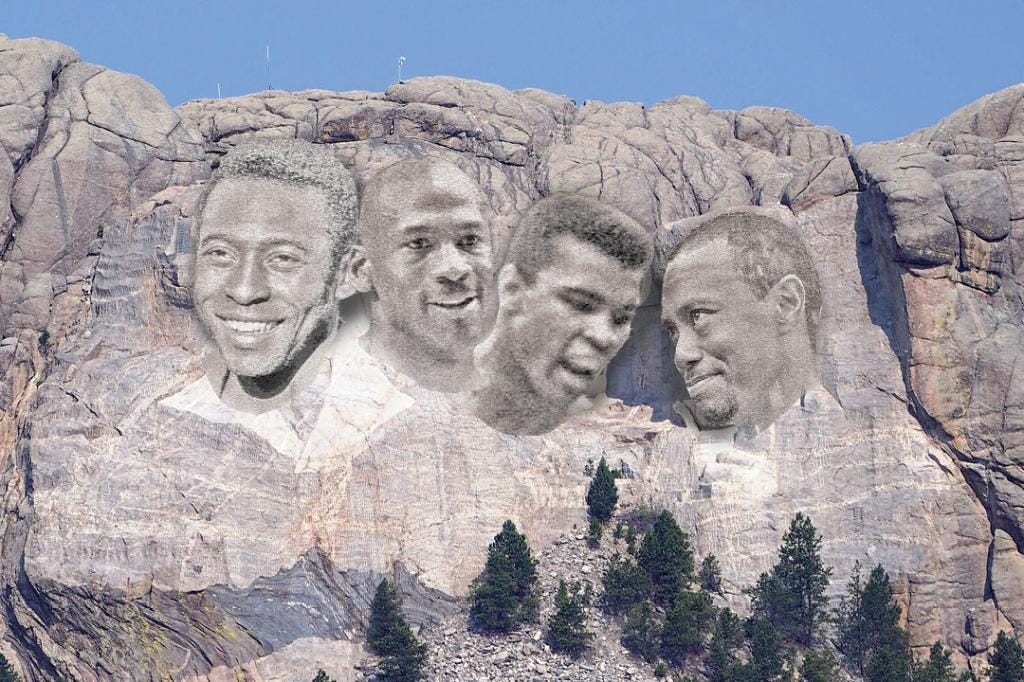
If these weekly devotions help grow your faith, you can help reach others by liking this post, sharing it with a friend, or posting it on social media. Got thoughts or feedback? Leave a comment below or email info@musterseed.com.
Who’s on your Mount Rushmore?
Chances are you have heard this rhetorical question posed by a podcaster or ESPN anchor to stir debate over who the top four performers are in a given field, whether quarterbacks, pitchers, or guitarists.
Here’s one for you…
Who’s on your Mount Rushmore of biblical figures?
Trick question …
You can’t even cobble together four answers for this because Christians don’t have a mountain of faith figures.
We have one Cornerstone (Ephesians 2:20, 1 Peter 2:6, Isaiah 28:16).
Yet, if we are honest, we often treat the Bible like another Mount Rushmore. This can be especially prevalent in children’s ministry, where hero-focused curricula promote a moralism that chisels away at the doctrine of grace—teaching kids “be brave like David” instead of “trust in the God who delivered David.”
How many times have you seen Moses taught as the flawless champion of the Exodus, while glossing over the murder that originally sent him fleeing into the desert?
We portray Samson as a muscle-bound Marvel character who rips a lion apart barehanded, but skip the parts where he treated lust and sin like a house pet.
And, of course, we love the story of that ruddy shepherd boy whose sling sent a stone straight into Goliath’s forehead—forgetting the far greater giant of sin that nearly took David down years later.
These men are great examples of how God’s grace and divine sovereignty reign through imperfect men. But we must be cautious not to turn these testimonies into a lifeless monument.
Each of these figures, in some way, points us to the perfect Christ.
It was Jesus who led us in an Exodus from our sin.
It was Jesus who displayed ultimate strength through humbly outstretching His arms on an old rugged cross.
And it was Jesus who slayed the giant of sin and death through His resurrection.
Giving ultimate credit to Old Testament figures for these victories is like praising the moon for producing light. They only reflect light from the Son, the exact same way the moon reflects light from the sun.
This makes the Mount Rushmore debate moot.
To be fair, we aren’t the first culture to look back at Old Testament figures as pillars. Hebrews 11 is famously called the Hall of Faith, but it serves as a reminder that even under the Old Covenant, it was God’s grace through faith—not human perfection or works—that accounted for righteousness.
That’s why Hebrews 12 immediately turns our eyes away from them:
“Looking to Jesus, the founder and perfecter of our faith” — Hebrews 12:2
The writer of Hebrews wrote this to Jews tempted to turn back from their faith in the face of persecution. The author knew that it has always been human nature to turn to men instead of God.
The nation of Israel had started building their own Mount Rushmore type ranking system long before rocks were blasted out of the Black Hills of South Dakota.
Consider these verses from prophets who warned Israel that their pillars of faith would not support the weight of their sin and rebellion.
“Then the LORD said to me, “Though Moses and Samuel stood before me, yet my heart would not turn toward this people. Send them out of my sight, and let them go!” — Jeremiah 15:1
“Even if these three men, Noah, Daniel, and Job, were in it, they would deliver but their own lives by their righteousness, declares the Lord GOD.” — Ezekiel 14:14
Moses, Samuel, Noah, Daniel and Job sounds like a good Mount Rushmore, though one can’t make the cut. That’s precisely why the Mount Rushmore argument is so popular — it forces us to narrow the field to a select quartet.
But God wasn’t name-dropping these men to prove their righteousness. Though they were incredible examples of faith and intercession, God used them to underscore the point that even they could not save the nation from judgment.
All of these men were sinners in need of redemption, just like us. As Paul writes in Romans:
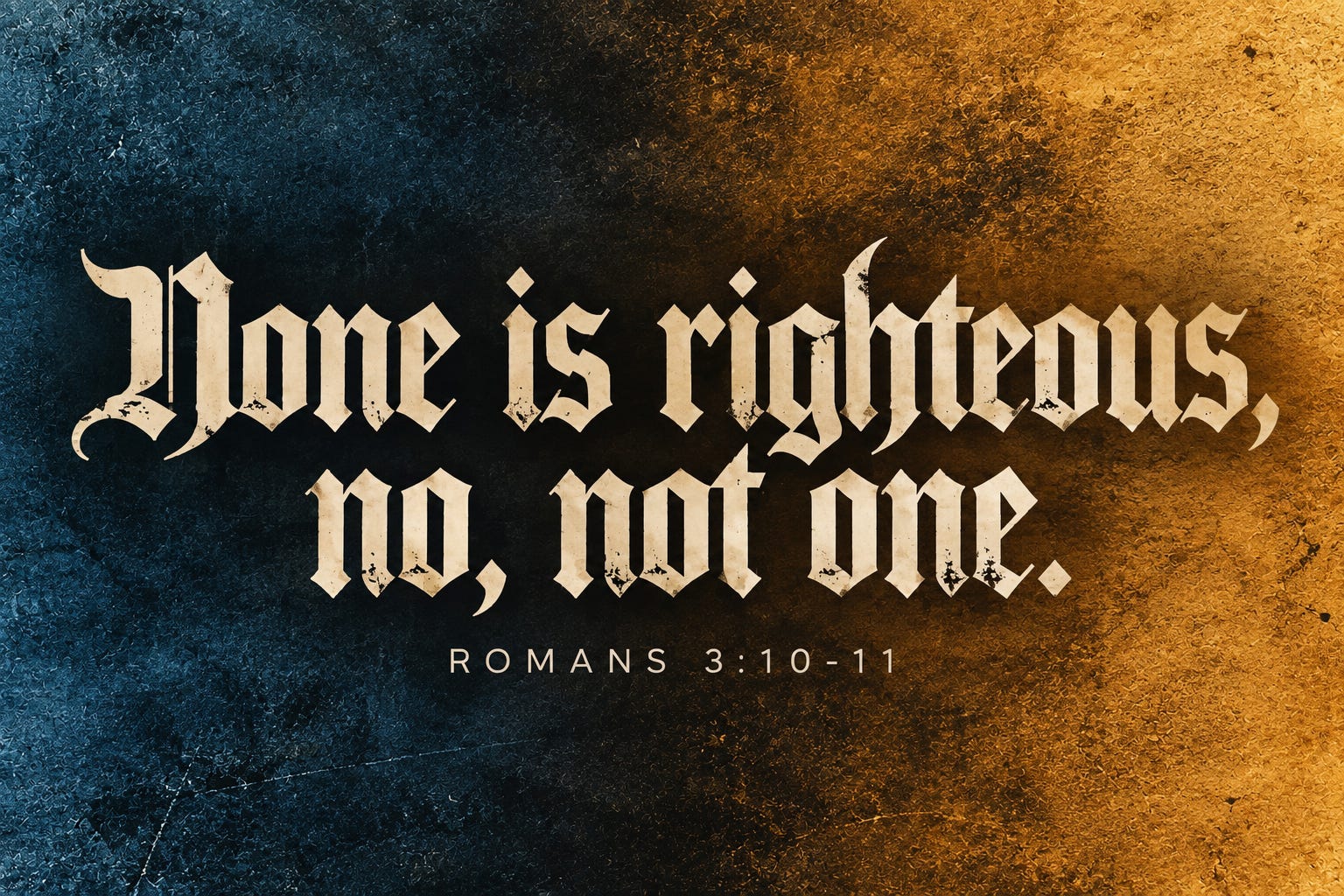
None is righteous, no, not one. — Romans 3:10-11
Paul didn’t invent this idea. He was inspired by Psalms 14 and 53, written by the same ruddy shepherd who as an adult realized the hardest battle he ever entered wasn’t against Goliath.
We can learn a great deal from the life and faith—and failures—of David and every person in the Hall of Faith. We should honor those whose journey has helped shape our own.
But if you are trying to ride their coattails rather than reaching for the hem of Jesus’s garment, you have missed the point (Matthew 9:20–22). We cannot borrow their faith, and we must never mistake them for the true foundation of ours.
Did you have a favorite Bible character growing up? As you look back on their story today, how do you now see their life pointing back to Christ?
Join in the conversation in the comments.
Follow our friends at the Suffer Up Podcast, whose mission is to encourage and lead others to suffer with a purpose. They strive to help others level up in life with an emphasis on spiritual, mental and physical wellbeing.