

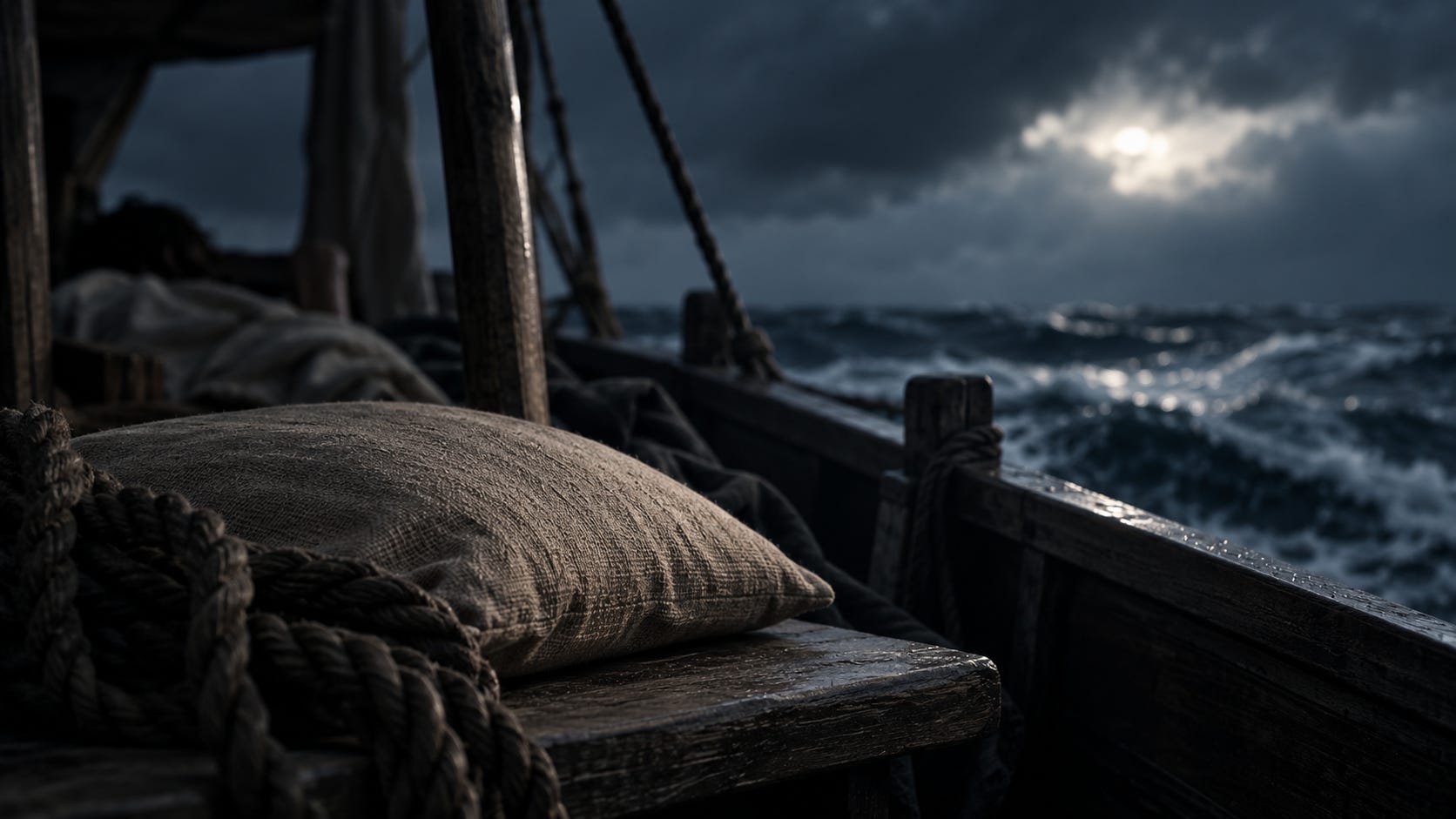
“Can you feel the ship moving when you are out to sea?”
This is one of the most common questions people ask about life on a Navy ship.
The answer is an emphatic, “Yes.”
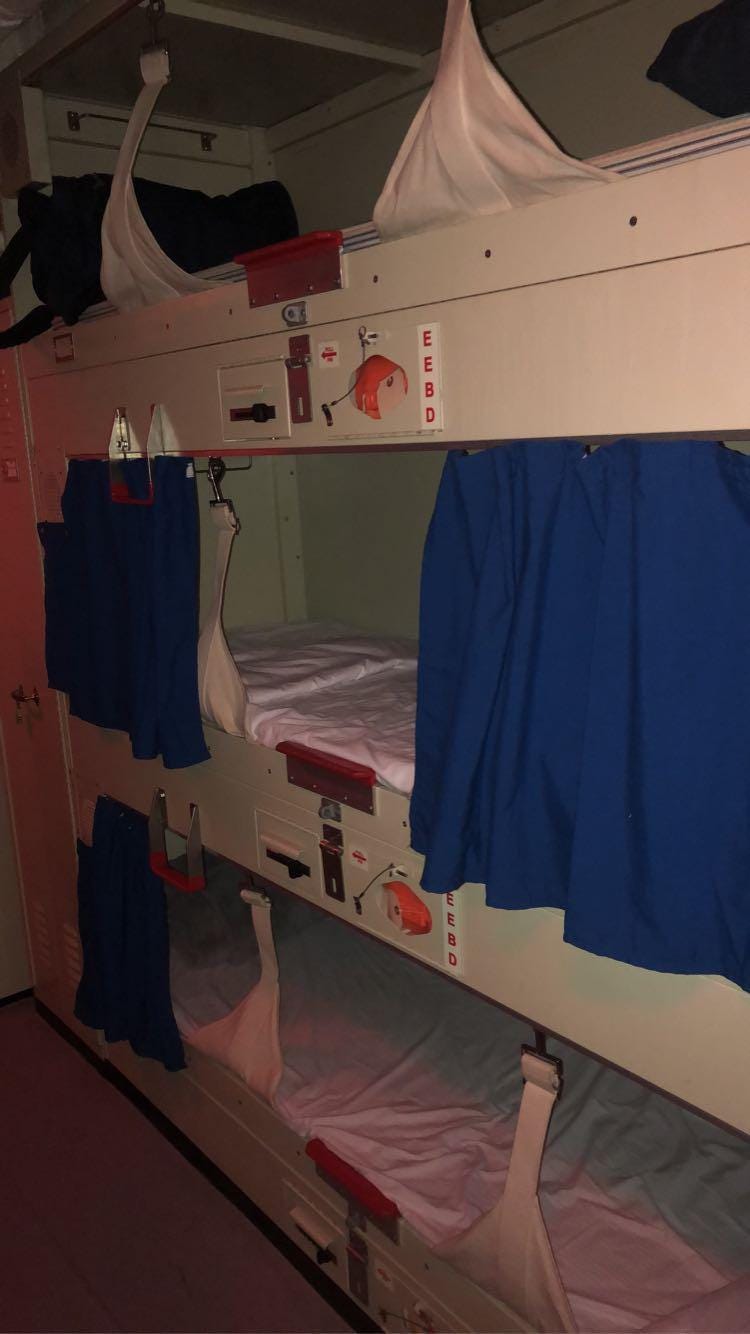
Our racks even come with straps to keep you from getting slung out by a storm in the middle of the night.
Despite the threat of ejection, the diminutive and dark confines of a Navy coffin rack can provide quality sleep. These bunk beds, usually stacked three high, earn their morbid moniker for their side-opening storage locker and not their danger at sea.
If the outside waves produce a side-to-side sway, it’s actually like a baby in a crib. That’s what it means to be rocked in the cradle of the deep.
I assume Jesus enjoyed this same at-sea slumber when the Synoptic Gospels record Him asleep aboard a boat crossing the stormy Sea of Galilee.
There are several fascinating points made by the gospel writers who record our Savior’s rest.
This event shows Jesus was fully man, experiencing the same human tiredness as us. But it also shows us that Jesus was fully God, resting in the Father’s comfort while holding the power to calm the same storm that lulled Him to sleep.
Fully Man
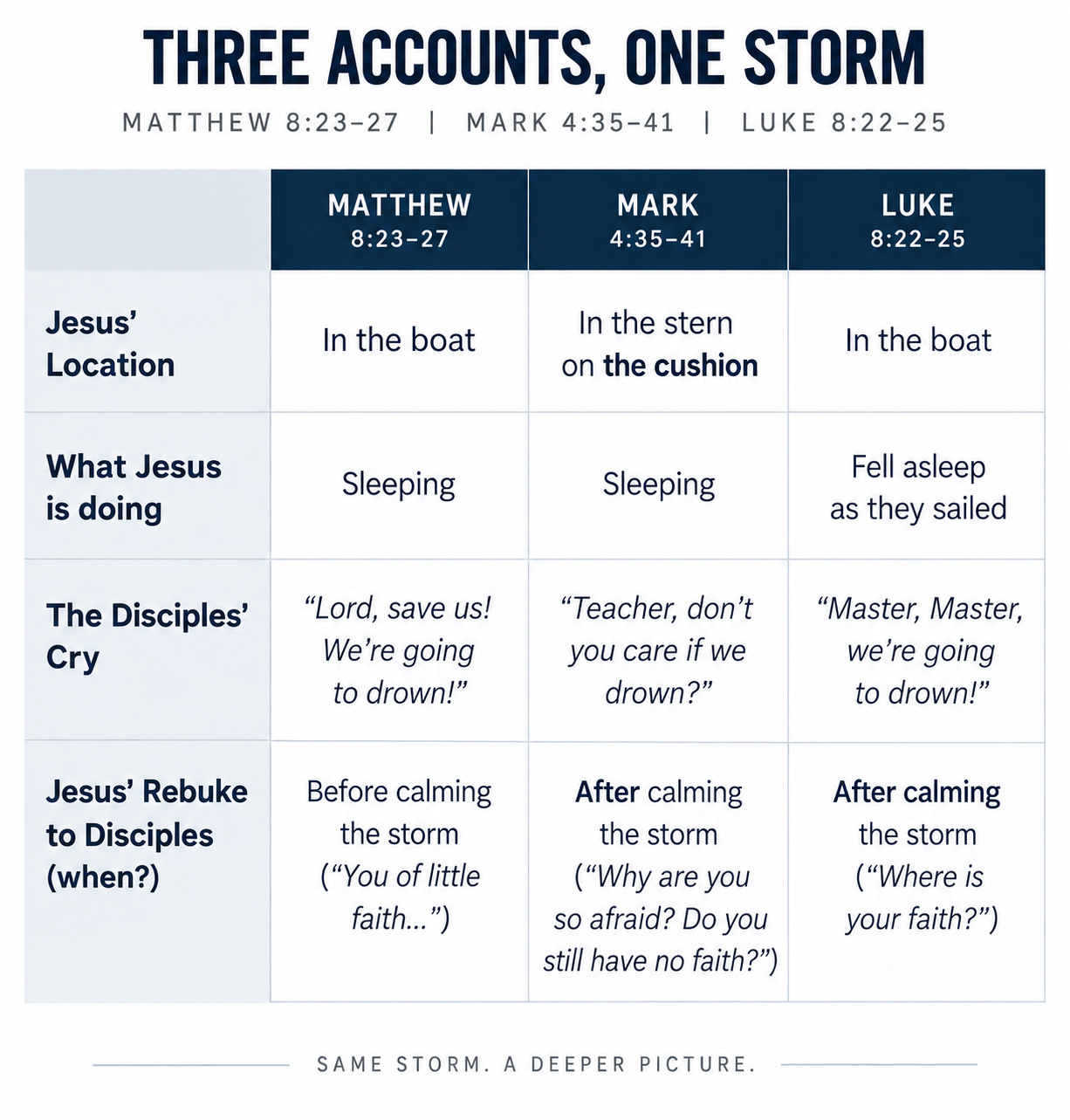
Each of the synoptic accounts puts Jesus on the ship after a long day of teaching and healing. The details vary in some areas, but this actually gives credibility to the accounts.
Each gospel writer gives us a different angle of the story—much like different camera angles in a film. A conversation in a movie can be captured close-up, at a high angle, or over the shoulder. Each shot offers a distinct perspective and highlights unique details like facial expressions that convey tone. Matthew, Mark, Luke, and John each addressed specific audiences, utilizing these distinct lenses to reveal different facets of the same truth.
I experienced this firsthand when I recently reconnected with two close friends I served with on a Navy ship nearly 15 years ago. As we swapped old sea stories, memories drifted back to a specific mission we shared.
Each of us remembered it a little differently. Same time. Same place. Same mission. But different perspectives.
One of my friends is a quartermaster, seeing the operation from the bridge. The other is a boatswain’s mate, experiencing it from the deck. I saw it from my own station. We each had different roles, responsibilities, and vantage points.
And that’s what made the storytelling so rich. One person recalled a detail another had forgotten, while another added a piece that made the whole account clearer—or much funnier.
Those distinct viewpoints didn’t contradict each other — they amplified the whole picture.
The gospel accounts work much the same way. One of the fascinating details included only by Mark is that Jesus “was in the stern, asleep on the cushion” (Mark 4:38). This is the Bible’s only use of the Greek word proskephalaion, meaning pillow or cushion. But notice he specifies the cushion.
Some commentators suggest that first-century fishing vessels on the Sea of Galilee kept a heavy leather bag at the stern, which could serve as ballast and, conveniently, a pillow.
Jesus asleep on this ballast sandbag shows He was buoyed by unwavering faith in the Father while His disciples floundered in fear. As the Bible Hub commentary notes, this minor detail magnifies Christ’s majesty, serving as a “a tangible witness that the One who slumbers in perfect peace also possesses infinite power to still every tempest.”
While Scripture does not explicitly identify Mark’s source for this detail, early church tradition closely connects Mark’s Gospel with Peter. And if Peter was the source behind Mark’s firsthand testimony, who better to remember the cushion detail than the seasoned fisherman who knew those Galilean boats stern to bow?
Fully God
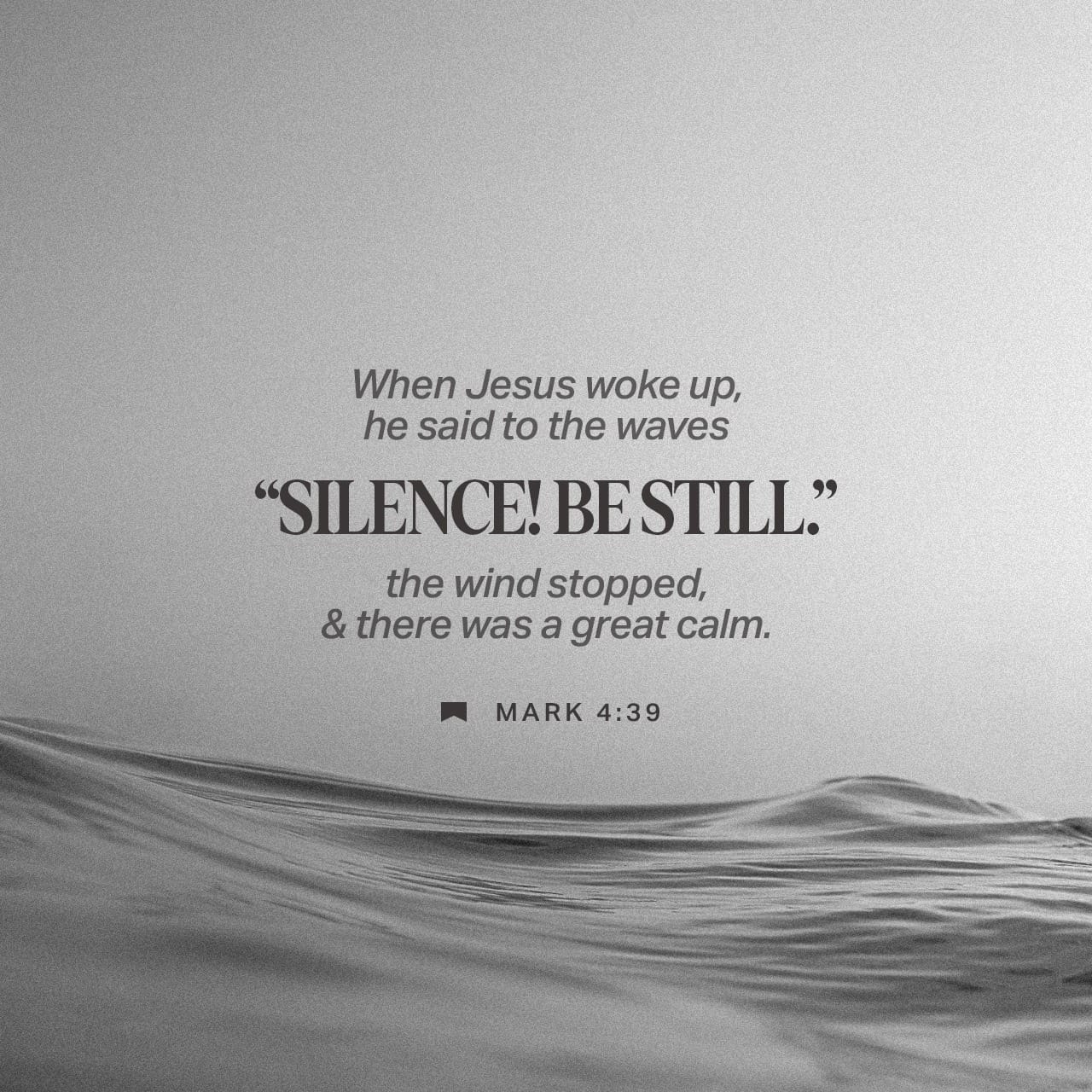
All three gospel accounts align on what happened when Jesus was stirred from His sleep. He stood up and commanded the storm to cease, leaving the disciples to ask in awe, “Who is this man?” His divinity was on full display.
The scene immediately following the tempest is identical in purpose, as well. Jesus arrives on the opposite shore—referred to as the region of the Gerasenes or Gadarenes depending on the gospel—and heals a demon-possessed man, casting a legion of spirits into swine and driving them into the sea.
Some scholars, such as Benjamin Gladd of Wheaton, suggest the storm Jesus slept through was no ordinary squall, but a surge of spiritual opposition—pointing to Old Testament themes where chaotic seas symbolize hostility to God. Indeed, Jesus explicitly “rebukes” the wind upon waking, the same language He uses when casting out spirits.
Whether or not the storm was demonically stirred, this narrative is clearly designed to awaken our Old Testament senses. Many view Jesus’s peaceful sleep as an echo of Psalm 4:8, where David wrote:
In peace I will both lie down and sleep; for You alone, O Lord, make me dwell in safety.
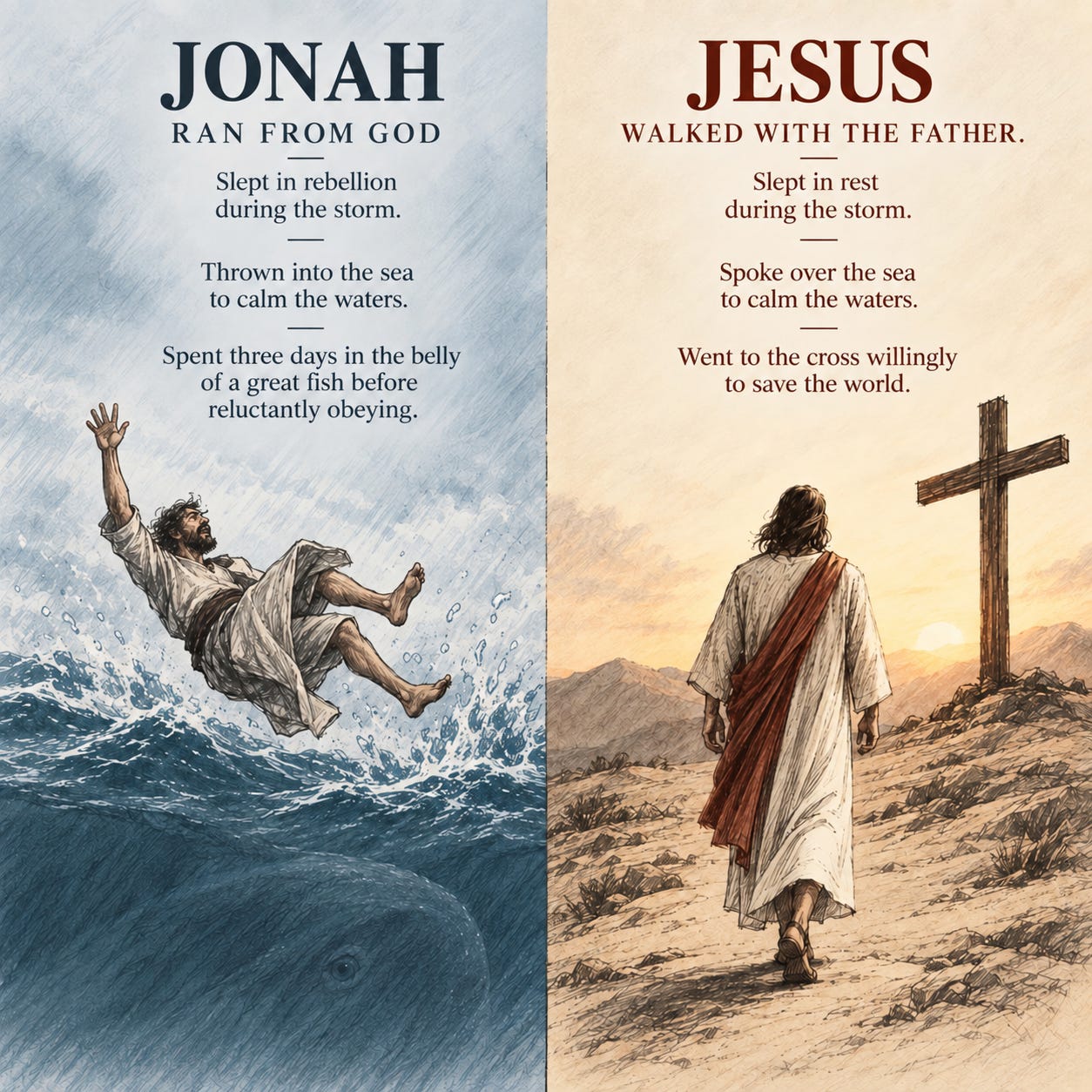
This scene also stands in direct contrast to Jonah, the rebellious prophet who fled God’s call and brought a deadly storm upon his vessel (Jonah 1:5). The parallels between Jonah and Jesus highlight a profound theological chasm:
Jonah slept in rebellion during a storm caused by his disobedience;
Jesus slept in rest during a storm he controlled.
Jonah’s storm was calmed when he was thrown into the sea;
Jesus’s storm was calmed when He spoke over the sea.
Jonah spent three days in the belly of a great fish before reluctantly continuing on God’s mission;
Jesus spent three days in the heart of the earth to redeem the entire world in eager fulfillment of God’s purpose.
Ultimately, Jesus stilled the ultimate storm of sin by walking into the grave and rising three days later in victory—offering eternal salvation to all who surrender to His Lordship. This was the “sign of Jonah” He promised in Matthew 12:39–40.
All of these accounts show Jesus at the helm of our faith. He was fully man, and He is fully God.
The next time life starts pitching and the storm rolls in, remember the ballast in the stern. Lay your head on the weight of His sovereignty, anchor your faith in His authority, and you’ll sleep like a baby—or an old sailor rocked in the cradle of the deep.
Want to go deeper in this study? Use the Muster Seed guide below and follow the link for discussion prompts.
Muster Seeds

Muster Seeds are open-source discipleship guides combining physical training, Scripture, discussion, and prayer. Like a mustard seed, they are small—designed to help men gather, grow, and go.
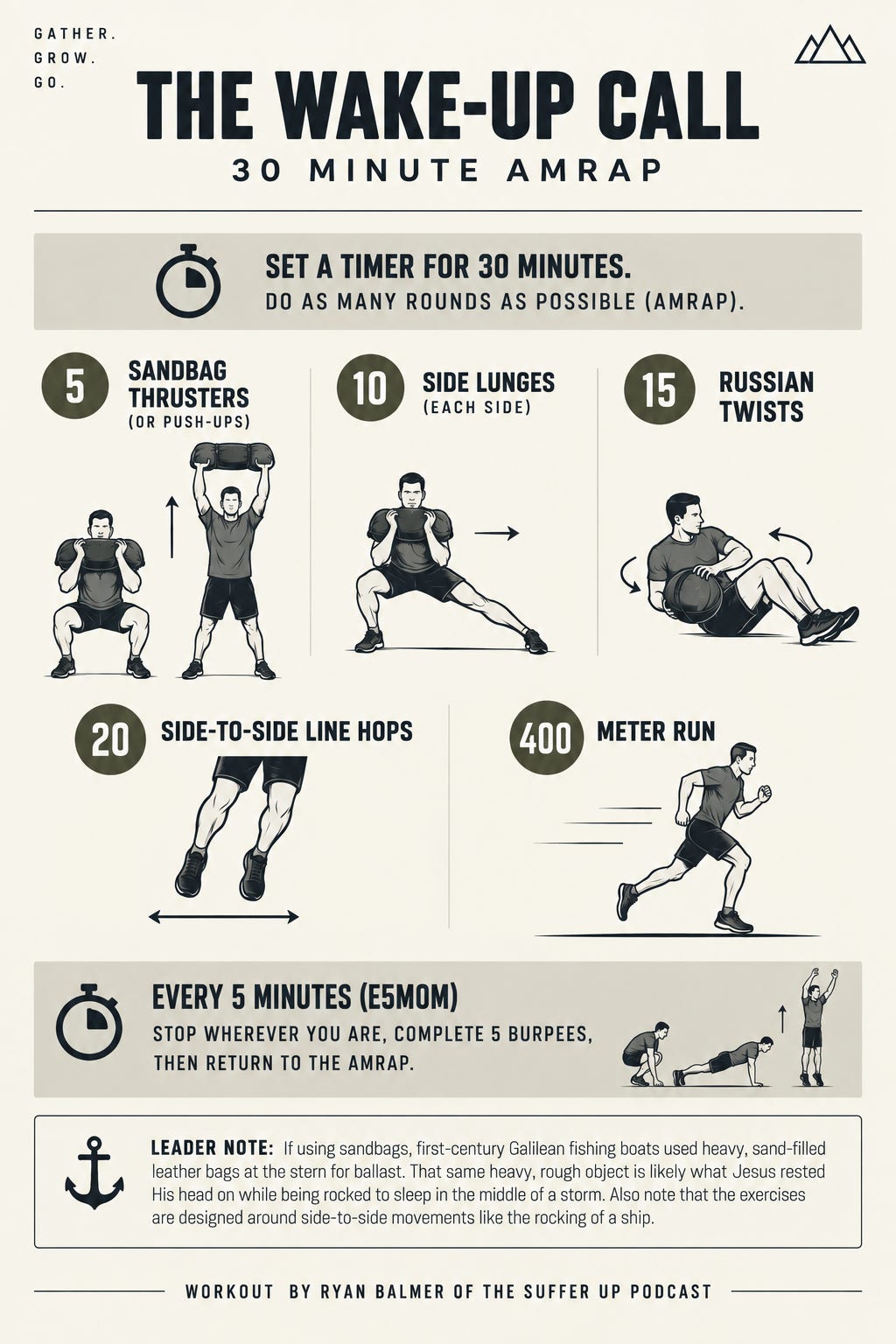
Follow our friends at the Suffer Up Podcast, whose mission is to encourage and lead others to suffer with a purpose. They strive to help others level up in life with an emphasis on spiritual, mental and physical wellbeing.